Uncategorized
- Animals
Breeding has given different dogs distinct brain shapes
An analysis of the shapes of brains in different dog breeds shows how humans have altered the animals’ brain anatomy.
- Materials Science
Scientists Say: Crystal
The atoms or molecules in crystals take on a particular, repeatable pattern.
- Life
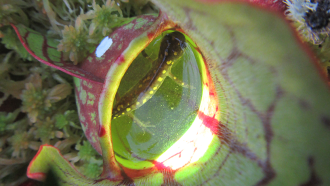
Meat-eating pitcher plants feast on baby salamanders
Scientists didn’t think meat-eating plants in North America ate vertebrates. They now know differently.
- Animals
Cool Jobs: Poop investigators
Far from just being waste, poop is loaded with clues to the health, biology and behavior of whatever body produced it.
- Computing
Computer chips from carbon nanotubes, not silicon, mark a milestone
Silicon has been king of cutting-edge electronics. But that reign may soon end, with carbon nanotubes taking silicon’s place.
- Climate
At the United Nations, youth leaders call for true climate action
Hundreds of young climate leaders gathered on September 21 for the first-ever United Nations Youth Climate Summit.
- Brain
Brain ‘ripples’ appear just before you remember something
Nerve cells in the brain’s hippocampus, a key memory center, fire together a second or two before people begin to recall an image, data now show.
- Climate
Climate misinformation may be thriving on YouTube
An analysis of 200 climate-related videos on YouTube shows that a majority challenge widely the accepted science about climate change and climate engineering.
- Archaeology
Scientists Say: Mummy
Mummies are dead bodies that don’t rot. They can form under natural conditions or because of chemicals that stop decay.
- Planets
Students help name 5 of Jupiter’s newly discovered moons
Astronomers announced discovering 12 new moons of Jupiter in July 2018. Five of them now just been named for goddesses and spirits of Greek and Roman mythology.
- Materials Science
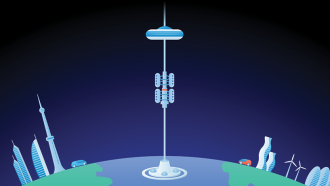
Could humans build a tall tower or giant rope to space?
The movie Ad Astra shows a space antenna, a spindly structure reaching up into the stars. We look at what it would take to build something that big.
- Health & Medicine
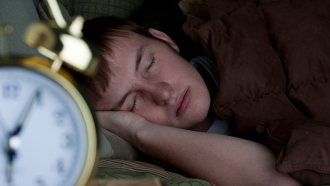
Don’t snooze on getting enough sleep
Sleeping the right amount at night is good for mental and physical health. Ironically, napping isn’t always helpful.