Uncategorized
- Animals
High-speed camera reveals the secrets of a legless larva’s leap
Research reveals how a blob of an insect can leap more efficiently than it crawls. Its body acts like a spring.
- Health & Medicine
Tiny vest could help sick babies breathe easier
A new invention helps sick babies breathe easier. It looks like a tiny lifejacket and it avoids the mask and tubes that get in the way of breastfeeding.
- Genetics
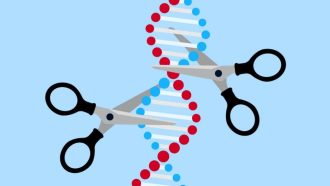
CRISPR enters its first human trials
A host of new human trials are using a gene-editing tool known as CRISPR to treat genetic diseases — from sickle cell and cancers to a blinding eye disorder.
- Life
Scientists Say: Zooxanthellae
Algae called zooxanthellae live in the tissue of coral and provide the coral with food and its color.
- Brain
Routine hits in a single football season may harm players’ brains
A group of college football players underwent brain scans after a season of play. The results suggest playing the sport could harm neural signaling.
- Tech
AI can learn real-world skills by playing video games
Video games are helping AI systems work together and adapt to real-world situations.
- Climate
Catch up with Climate Change Chronicles
Science News for Students spent a year documenting climate change around the globe. Here’s a roundup of the main stories from the series.
- Climate
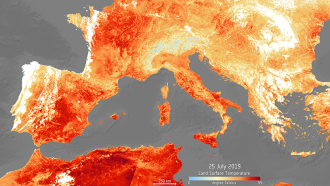
Record heat is burning the Arctic and melting Greenland’s ice
High temperatures are melting Greenland’s ice. They’re also fueling Arctic wildfires that are pumping record amounts of carbon dioxide into the air.
- Health & Medicine
Outbreak of lung disease, including 5 deaths, tied to e-cigarettes
Some 450 e-cig users have been hospitalized for severe lung disease across 33 states and U.S. territories. Five of them have died.
- Chemistry
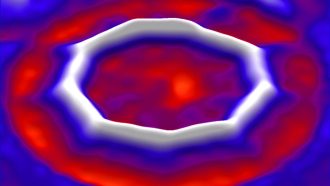
Chemists have created a ring-shaped form of carbon
A ring-shaped carbon molecule takes its place among buckyballs, carbon nanotubes and other odd forms of the element.
- Space
Scientists Say: Galaxy
A galaxy is a group of millions to billions of stars, plus a lot of dust and gas.
- Climate
Today’s global warming is unlike the last 2,000 years of climate shifts
Temperatures at the end of the 20th century were hotter almost everywhere on the planet than in the previous two millennia. And it’s only gotten hotter.