
All Stories by Bethany Brookshire
-
A teen and a trolley reveal society’s dark side
If a trolley continues on its track, five people will die. But you can flip a switch so that it only kills one. A student showed that how we decide what to do in this situation can reveal our hidden biases.
-
That’s when I knew I loved science
Finalists at the Intel Science Talent Search competition tell Eureka! Lab when they realized they loved science, technology, engineering and math.
-
Science foils fencing history
Fencing is a sport where knowledge has been handed down for many generations. A high school student decided to add some science into the mix.
- Health & Medicine
Scientists Say: Circadian
We often feel the pull of sleep when the sun goes down. Light and our own biology put us into a regular, 24-hour rhythm that has its own word.
- Tech
Museum app fleshes out old bones
Museum app breathes life into skeletons. But it will need more funding to make it shine.
- Brain
Scientists Say: Blood-brain barrier
Blood can contain nasty bacteria and other things you want to keep away from your delicate brain. The blood-brain barrier is up to the job.
-
Popping my own corny experiment
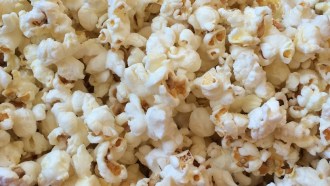
Popcorn pops at 180 °C, according to a study, but that was corn popped in an oven. What happens if you try to confirm this on a stove top?
- Psychology
Scientists Say: Pareidolia
We often see things that aren’t there, such as bunnies in clouds or faces in toast. They aren’t real, but they do have a special name
- Physics
How popcorn got its pop
Popcorn is a popular treat. Now, scientists have learned exactly what happens as it pops. They also have come up with an experiment they hope you will try.
- Life
Scientists Say: Parthenogenesis
When a baby frog develops from an egg that’s never been fertilized, we call that parthenogenesis.
-
These drones are for the birds
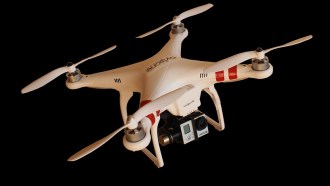
Flying robots represent a great opportunity to observe wildlife. But if scientists want animals to behave naturally, they need to know close we can get before they disturb wild creatures. For that, researchers will need an experiment.
- Materials Science
Scientists Say: Colloid
When water hovers in the air as fog and when bits of fat disperse in water as milk, they form a type of substance called a colloid.