HS-ESS1-2
Construct an explanation of the Big Bang theory based on astronomical evidence of light spectra, motion of distant galaxies, and composition of matter in the universe.
- Math
Meet ‘Pi’ — a new Earth-sized planet
Searching through data from NASA’s K2 Mission, researchers found a new planet. Some call it K2-315b, others smile and refer to it as “Pi Earth.”
- Planets
Jupiter may have ‘sprites’ or ‘elves’ in its atmosphere
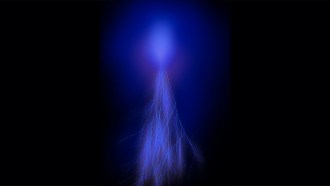
This is the first time that scientists have seen hints of these weird side effects of lightning storms somewhere other than on Earth.
- Planets
There’s water on sunny parts of the moon, scientists confirm
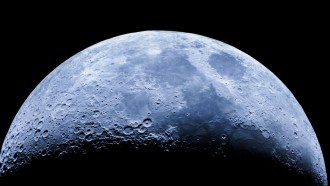
The new observations were made by a telescope on board a jet in Earth’s atmosphere. They confirm the presence of water on sunlit areas of the moon.
- Health & Medicine
Surviving Mars missions will take planning and lots of innovation
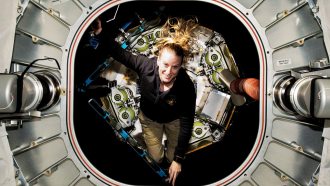
Astronauts that go to Mars will need protection from microgravity and radiation, plus mini-medical devices to diagnose problems and manage emergencies.
- Physics
This high-tech sweeper is designed for super-clingy moon dust
An electron beam is the newest tool being developed to remove sticky and damaging lunar dust from surfaces.
- Physics
2020 Physics Nobel goes for delving into black holes
Although Einstein’s general theory of relative suggested black holes might exist, this year’s winner’s helped show they actually are out there.
- Physics
Strange but true: White dwarfs shrink as they gain mass
Telescope observations of thousands of these stars now confirm a decades-old theory on how their masses relate to their waistline.
- Space
A weird cousin of our solar system is caught on camera
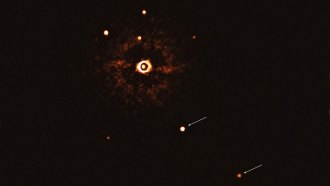
New photo reveals a cousin to our solar system. It’s star has a mass similar to the sun’s and is orbited by two gas giant planets.
- Physics
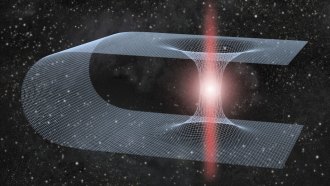
Could ripples in spacetime point to wormholes?
A new calculation reveals that strange gravitational waves detected by LIGO and Virgo could see if a black hole were falling into a hypothetical tunnel in spacetime.
- Physics
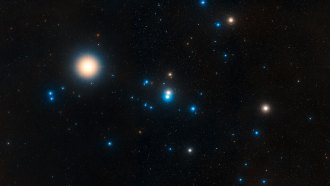
Milky Way’s tidal forces are shredding a nearby star cluster
The nearest star cluster is being pulled apart, due largely to the tidal forces of our galaxy, the Milky Way. Bye bye, Hyades!
- Physics
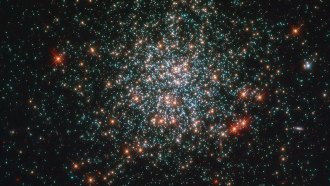
Explainer: Stars and their families
Most pinpoints that light the night sky are raging infernos we call stars. As adults, many will create new elements that they later cast off into the cosmos.
- Planets
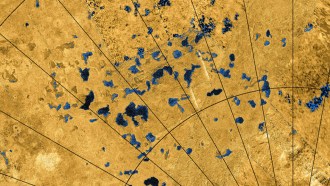
Saturn’s moon Titan may host lots of dried lakes
Suspicious spots around the moon’s middle could be the beds of ancient lakes. If so, this might solve a 20-year-old mystery.