HS-ESS1-2
Construct an explanation of the Big Bang theory based on astronomical evidence of light spectra, motion of distant galaxies, and composition of matter in the universe.
- Planets
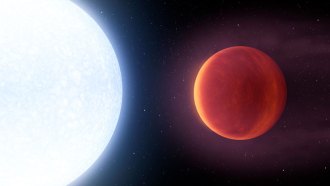
Hot, hot planet sets sizzling new record
Astronomers have discovered an odd new exoplanet. Called KELT 9b, is the hottest non-star known.
- Physics
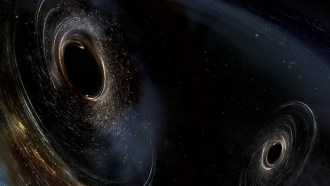
Gravitational waves detected yet again
For the third time in 16 months, scientists have announced detection of gravitational waves washing over the spacetime environment in which Earth resides. This seems to show that such waves may not be rare.
- Space
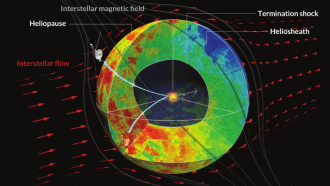
How the solar system’s tail disappeared
A bubble envelops the planets and other material in the solar system. New data show it does not have a long tail but is round.
- Physics
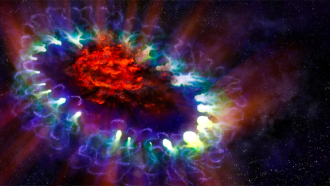
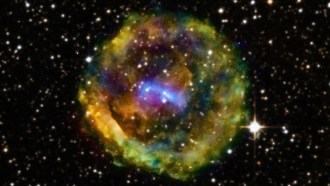
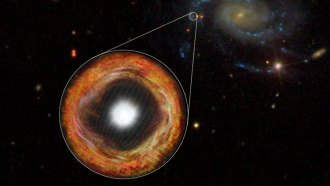
After 30 years, this supernova is still sharing secrets
It’s been 30 years since astronomers first witnessed the stellar explosion known as SN 1987A. Today, researchers are still learning from this cataclysmic phenomenon.
- Space
Scientists Say: Supernova
When a star has too much mass, it can explode. The explosion is called a supernova.
- Physics
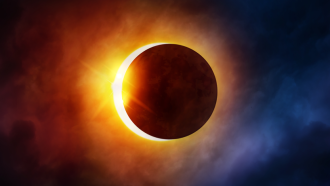
Eclipses come in many forms
Eclipses are one of nature’s most awesome spectacles, and scientists have learned a lot by observing them and related celestial alignments — occultations and transits.
- Space
Cosmic mystery: Why are many galaxies dark?
Dark galaxies went unnoticed until 2015. Since then, scientists have now found more than 1,000 — and there may be many, many more.
- Earth
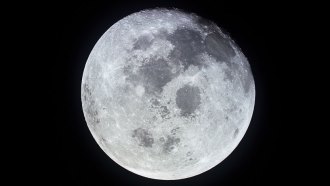
How Earth got its moon
How did our moon form? Scientists are still debating the answer. It may be the result of some one big impact with Earth — or perhaps many small ones.
- Math
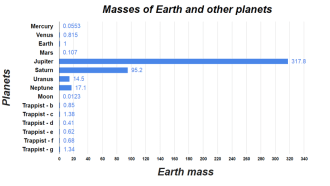
Analyze This: The masses of planets
Scientists discovered a solar system with planets that are similar in size and mass to Earth. Using data, we take a closer look at that similarity.
- Planets
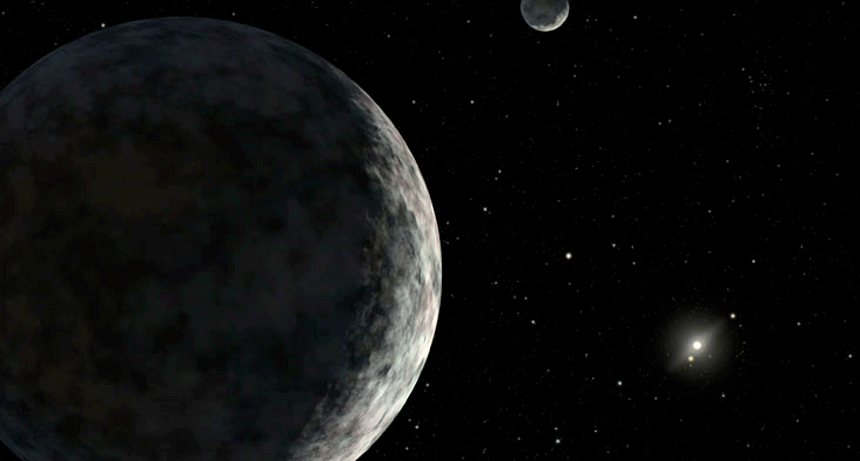
Scientists Say: Dwarf planet
Dwarf planets are distinct from the full-size models. A little too small, they also have a lot of space stuff filling their path around the sun.
- Animals
Cool Jobs: A world aglow
Three scientists probe how the natural world makes light, in hopes of using this information to design new and better products.
- Physics
Star caught passing gas before exploding
Stars can become unstable as they near death, a new study suggests. Some may even spew gas for a year or so before they explode.