HS-ESS1-6
Apply scientific reasoning and evidence from ancient Earth materials, meteorites, and other planetary surfaces to construct an account of Earth's formation and early history.
- Physics
Glass beads help scientists puzzle out how baby planets grow
Researchers have mimicked the first stages of planet formation in the lab. All they needed were glass beads and a catapult.
- Physics
Explainer: Understanding meteors and meteor showers
Meteors regularly enter Earth’s atmosphere. Most ‘shooting stars’ pose few risks to life on the ground, but the rare big ones can be lethal.
- Earth
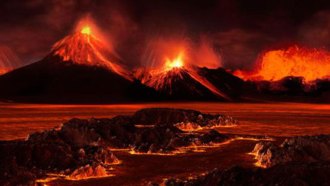
Explainer: Understanding geologic time
Geologic time is unimaginably long. Geologists puzzle it out using a calendar called the Geologic Time Scale.
- Chemistry
Asteroids may have delivered water to early Earth
Scientists shot mineral pellets at a simulated planet. It showed an impact wouldn’t have boiled off all of an asteroid’s water.
- Planets
Jupiter may be the solar system’s oldest planet
Jupiter’s early existence may explain the odd arrangement of planets in the solar system, a new study suggests.
- Planets
Jupiter gets surprisingly complex new portrait
NASA’s Juno spacecraft has sent back unexpected details about Jupiter, giving scientists their first close-up of this gas giant.
- Earth
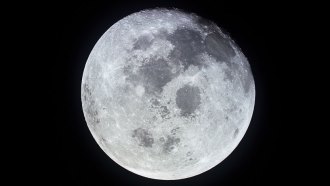
How Earth got its moon
How did our moon form? Scientists are still debating the answer. It may be the result of some one big impact with Earth — or perhaps many small ones.
- Planets
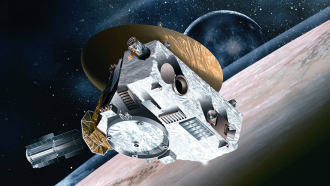
Cool Jobs: Probing Pluto
The New Horizons mission captivated the world as it flew by Pluto. Here are some of the people who made that possible.
- Chemistry
Oxygen-rich air emerged super early, new data show
Scientists had thought animals were slow to emerge because they would have needed oxygen-rich air to breathe. A new study finds that plentiful oxygen may have developed early. So animals may have been late on the scene for another reason.
- Earth
Cool Jobs: Mapping the unknown
Scientists find different ways of exploring places humans will never visit — and drawing maps to help us better understand such mysterious places.
- Climate
Clues to the Great Dying
Millions of years ago, nearly all life on Earth vanished. Scientists are now starting to figure out what happened.
- Space
Pollution may give ‘first’ stars a youthful look
The oldest stars should be made of only light elements. But these suns may have sucked up heavier elements, giving them a more youthful appearance, a new study finds.