HS-ETS1-1
Analyze a major global challenge to specify qualitative and quantitative criteria and constraints for solutions that account for societal needs and wants.
- Animals
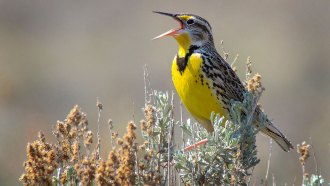
Around the world, birds are in crisis
Human activities around the world are threatening bird species. Numbers of even some of the most common species are starting to fall.
- Health & Medicine
Third major vaccine shows great promise against COVID-19
This vaccine, which may be easier to get to the public, appears to be 90 percent effective at halting disease and maybe spread of the new coronavirus.
- Health & Medicine
Moderna vaccine for COVID-19 appears nearly 95 percent effective
A second coronavirus vaccine appears super effective in preventing people from being sickened by COVID-19.
- Health & Medicine
New Pfizer vaccine appears 90 percent effective against COVID-19
Preliminary finds show one of the new coronavirus vaccines appears 90 percent effective at reducing symptomatic COVID-19 infections.
- Agriculture
Student scientists work to help all of us survive a warmer world
From glaciers in the refrigerator to a rover in the field, here’s how young scientists are looking to help us adapt to climate change.
- Health & Medicine
Trio wins 2020 Nobel for discovery of hepatitis C
It took 50 years from discovery of hepatitis C to its cure. For their pivotal work in this area, three men will take home a 2020 Nobel Prize.
- Brain
A secret of science: Mistakes boost understanding
Everyone makes mistakes. It turns out that how you view them says a lot about how — and how much — you’ll learn.
- Brain
Puberty may reboot the brain and behaviors
Facing adversity early in life can hurt how children learn to deal with stress. Puberty can sometimes offer a chance to reset how the body responds to stress, returning it to normal.
- Genetics
A Hong Kong man got the new coronavirus twice
His is the first confirmed case of reinfection with this virus. His second bout was detected by accident, because he showed no symptoms.
- Environment
Dust can infect animals with flu, raising coronavirus concerns
Dust particles kicked up from some virus-contaminated surface can become a source of new infections, rodent data show.
- Computing
A robot referee can really keep its ‘eye’ on the ball
Have you ever yelled at a referee for making a bad call? Technology has begun taking over some calls in an attempt to make sports fairer.
- Animals
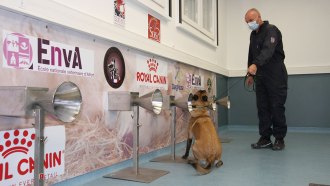
Viral scents? Dogs sniff out coronavirus in human sweat
Researchers train dogs to sniff out COVID-19. In the United Arab Emirates, sniffer dogs have already begun identifying infected passengers at airports.