HS-ETS1-1
Analyze a major global challenge to specify qualitative and quantitative criteria and constraints for solutions that account for societal needs and wants.
- Animals
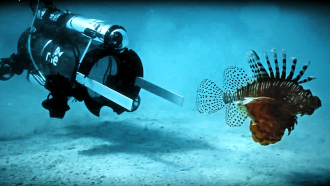
Underwater robot vacuums up lionfish
Lionfish damage coral reefs in the Atlantic Ocean. A new underwater robot hunts, stuns and captures the bullies with help from a human operator.
- Physics
Physics guides teen in search for which bike tire is best
Mountain bikes have lots of options, including the size of the wheels. The choice a rider makes when buying a bike can affect how fast they can go.
- Microbes
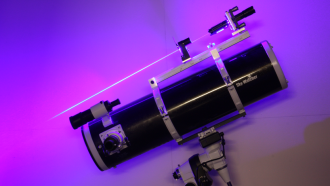
Tweaked germs glow to pinpoint buried landmines
Finding landmines could become much safer with a new technology. It uses genetically modified bacteria that glow under laser light.
- Life
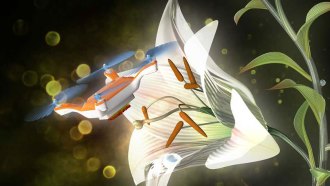
Fleets of flying robots could pollinate crops
Tiny flying drones use patches of sticky hair to capture pollen. One day they might join bees in pollinating crops.
- Physics
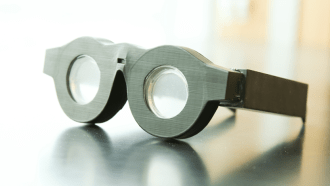
Auto-focus eyeglasses rely on liquid lenses
Engineers have designed what could be the last eyeglasses anyone would need. Right now, they’re bulky but smart. Liquid lenses are key to their adjustability — and those lenses focus automatically.
- Science & Society
Should we call out to space aliens?
Scientists have been listening to space for decades, hoping to pick up alien signals. Now some have proposed we try broadcasting a welcome call.
- Animals
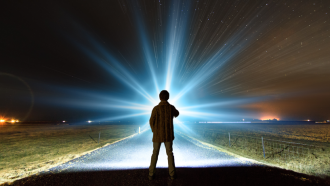
Cool Jobs: A world aglow
Three scientists probe how the natural world makes light, in hopes of using this information to design new and better products.
- Tech
Scientists turn toy into valuable tool for medical diagnosis
A human-powered ‘paperfuge,’ inspired by a toy, could serve as an easy, low-cost way to aid in medical diagnoses, even in regions of the world lacking access to electricity.
- Computing
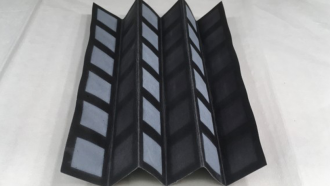
Germs power new paper batteries
New paper-based batteries rely on bacteria to generate electricity. These ‘papertronic’ power systems may be a safer choice for remote sites or dangerous environments.
- Animals
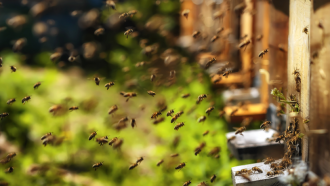
Cool Jobs: Abuzz for bees
These scientists are keeping bees healthy, making medicines for people from honey and constructing bee-inspired robots.
- Computing
The Internet of Things wants to link all facets of our world
The Internet of Things means everyday objects are becoming computers. Can people harness this technology to make the world better?
- Computing
LEDs offer new way to kill germs in water
Growing ultraviolet-light-emitting diodes on thin, flexible sheets of metal holds promise for water disinfection and other applications.