HS-ETS1-2
Design a solution to a complex real-world problem by breaking it down into smaller, more manageable problems that can be solved through engineering.
-
Teen studies better cleaning through chemistry
Why do we use hot water and soap to get things clean? To find out, a teen invented a way to measure surface tension.
- Animals
Creative ways to help coral reefs recover
Coral reefs are under siege from threats ranging from climate change to explosives. But scientists are developing ways to rebuild reefs before they disappear.
- Earth
Nicotine from smoke enters body through the skin
Scientists have shown for the first time that nicotine from cigarette smoke can enter the body through bare skin from the air or contact with smoky clothes.
- Genetics
Explainer: What is epigenetics?
Epigenetics is the study of molecular “switches” that turn genes on and off. Tweak those switches and there could be big health consequences.
- Health & Medicine
‘Smart’ sutures monitor healing
Coatings added to the threads used to stitch up a wound let researchers use electrical signals to monitor a wound’s healing — even one covered by a bandage.
- Animals
Beetles offer people lessons in moisture control
Taking tricks from a beetle, researchers are designing surfaces that collect water from the air or resist frost buildup.
- Health & Medicine
Nano medicines take aim at big diseases
Nanomedicines are new treatments and tools that are taking aim at disease from the cellular level. Medicine’s next big thing could be very teeny tiny.
- Brain
Gasp! At the movies, your breaths reveal your emotions
Researchers took air samples as they screened movies. What people exhaled were linked to film scenes’ emotional tone, they found.
- Earth
Fighting big farm pollution with a tiny plant
Fertilizer runoff can fuel the growth of toxic algae nearby lakes. A teen decided to harness a tiny plant to sop up that fertilizer.
- Chemistry
Concrete science
Teen researchers are exploring ways to strengthen this building material, use it for safety purposes and use its discarded rubble.
- Space
Biologist Kate Rubins is headed to space
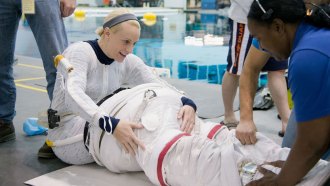
Molecular biologist and astronaut Kate Rubins has spent 7 years preparing for a mission to the International Space Station. She blasts off this month.
- Computing
‘Couch potatoes’ tend to be TV-energy hogs
Many government programs urge people to save electricity by using more efficient TVs. Here’s why these programs should target “couch potatoes.”