HS-ETS1-2
Design a solution to a complex real-world problem by breaking it down into smaller, more manageable problems that can be solved through engineering.
- Health & Medicine
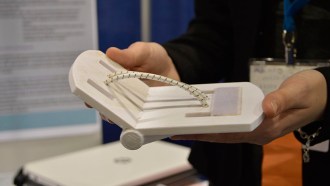
Helping MS patients get a grip on things
An Irish teen has invented a device that helps people with multiple sclerosis address the “clenched fist” symptom that afflicts most such patients.
- Health & Medicine
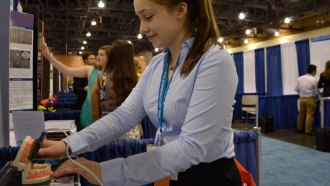
Control a computer with your tongue
Thousands of severely paralyzed people could venture into cyberspace with the use of this new tongue-controlled computer mouse. It was developed by a teen.
- Tech
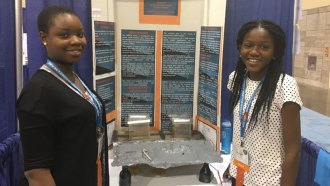
Teens invent way to keep floodwaters out of subways
Two New York teens have designed an inexpensive subway grate to block floodwaters from getting into subway tunnels.
- Earth
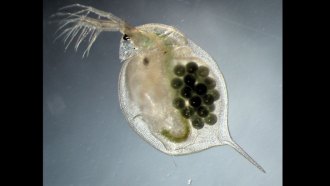
Common water pollutants hurt freshwater organisms
The germ killers we use and the drugs we take don’t just disappear. They can end up in the environment. There they can harm aquatic organisms, three teens showed.
-
Teens share what inspired them in STEM
What inspires kids to pursue science, technology, engineering and math? These teens share their stories.
-
Taking science to the track
An athlete took on science research with a few friends and a heart monitor.
- Tech
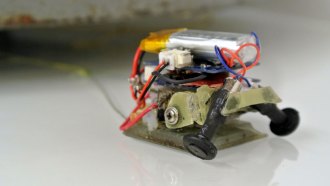
Tiny microrobots team up and move full-size car
Researchers have just created robots that mimic the ability of ants to move super-large objects.
- Brain
Cool jobs: Brainy ways to battle obesity
Scientists from different fields are tapping into connections between food and the brain to help people fight obesity and overcome the urge to overeat.
- Chemistry
Microbes mine treasure from waste
Like miniature factories, bioreactors house microbes recruited to chew through wastes to clean dirty water, make chemicals or generate electricity.
- Physics
Explainer: What are gravitational waves?
Albert Einstein had predicted that large catastrophes, like colliding black holes, should produce tiny ripples in the fabric of space. In 2016, scientists reported finally detecting them
- Chemistry
Olive oil untangles plastic
Vegetable oils can make plastic fibers stronger. And the process is safer and better for the environment than other detanglers.
- Animals
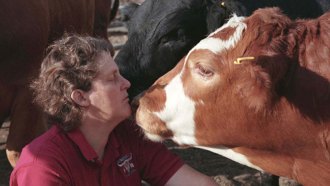
Profile: A human touch for animals
Temple Grandin uses her own autism to understand how animals think. The animal scientist is famous for fostering the humane treatment of livestock.