HS-ETS1-3
Evaluate a solution to a complex real-world problem based on prioritized criteria and trade-offs that account for a range of constraints, including cost, safety, reliability, and aesthetics, as well as possible social, cultural, and environmental impacts.
- Animals
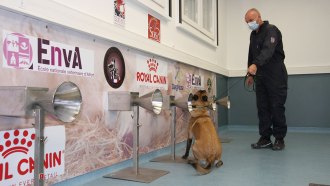
Viral scents? Dogs sniff out coronavirus in human sweat
Researchers train dogs to sniff out COVID-19. In the United Arab Emirates, sniffer dogs have already begun identifying infected passengers at airports.
- Life
For teens, big problems may lead to meaningful research
Several teens who competed at the Regeneron Science Talent Search applied their STEM know-how to solve problems they or their communities faced.
- Genetics
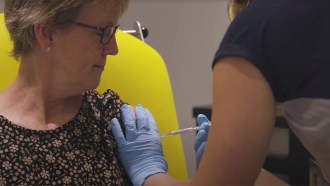
New COVID-19 vaccines show promise in people
Early data from human trials show that several candidate COVID-19 vaccines produce virus-inactivating antibodies and immune cells that fight the virus.
- Health & Medicine
Remdesivir is looking even better at fighting COVID-19
New studies suggest the drug remdesivir not only speeds recovery of COVID-19 patients in the hospital, but lowers their risk of death from the virus.
- Materials Science
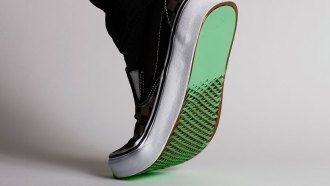
Shape-shifting cuts give shoes a better grip
With pop-out structures inspired by kirigami and animals, a shoe sole goes from flat to spiky to boost friction on slippery surfaces such as ice.
- Physics
A contrast between shadows and light can now generate electricity
A new device exploits the contrast between bright spots and shade to produce a current that can power small electronics.
- Animals
Toxic germs on its skin make this newt deadly
Bacteria living on the skin of some rough-skinned newts make tetrodotoxin. This paralyzing poison is also found in pufferfish.
- Health & Medicine
Common drug, dexamethasone, appears first to cut COVID-19 deaths
A drug used for decades to treat inflammation now appears useful in saving the lives of severely ill COVID-19 patients — ones who have trouble breathing.
- Materials Science
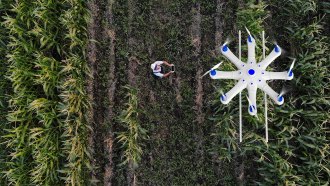
Silk-based microneedles may help treat diseased plants
Engineers have invented silk microneedles to inject medicines into plants. One day farmers might use drones to dart their sick plants with meds from the air.
- Materials Science
Astronauts may be able to make cement with their own pee
Lunar dust and a compound found in urine might one day be used to build future dwellings on the moon, a new study finds.
- Health & Medicine
Waiting for a ‘smart’ toilet? It’s nearly here
With every bathroom visit, we flush away important health data. Scientists hope to change that with 'smart toilets' that analyze your body’s output.
- Science & Society
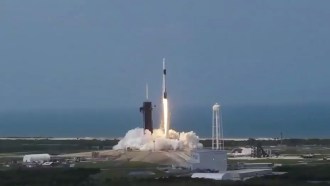
A first: Commercial rocket takes humans into space
Two NASA astronauts aboard the privately built Crew Dragon capsule are the first to be sent into orbit from U.S. soil since 2011.