HS-ETS1-3
Evaluate a solution to a complex real-world problem based on prioritized criteria and trade-offs that account for a range of constraints, including cost, safety, reliability, and aesthetics, as well as possible social, cultural, and environmental impacts.
- Agriculture
Student scientists work to help all of us survive a warmer world
From glaciers in the refrigerator to a rover in the field, here’s how young scientists are looking to help us adapt to climate change.
- Physics
Trees power this alarm system for remote forest fires
Wind moving through tree branches is all the energy needed to power devices that can detect a remote fire before it rages into an uncontrolled inferno.
- Physics
This high-tech sweeper is designed for super-clingy moon dust
An electron beam is the newest tool being developed to remove sticky and damaging lunar dust from surfaces.
- Health & Medicine
Trio wins 2020 Nobel for discovery of hepatitis C
It took 50 years from discovery of hepatitis C to its cure. For their pivotal work in this area, three men will take home a 2020 Nobel Prize.
- Chemistry
How to recycle ‘nonrecyclable’ plastics
A new process can convert some nonrecyclable plastics into a type that now can be reused. That could greatly cut down on wastes sent to landfills.
- Brain
Confidence can make you miss important information
Being confident can feed a confirmation bias in us, new studies show. This bias can make your brain ignore other people’s ideas and any conflicting information.
- Health & Medicine
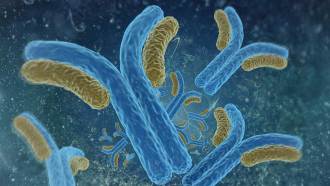
A glowing new way to measure antibodies
Researchers invent a way to detect and measure antibodies with glowing proteins. Antibodies can mark exposure to various diseases.
- Life
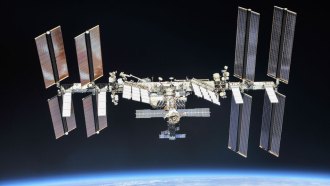
If bacteria stick together, they can survive for years in space
Tiny clumps of bacteria can survive at least three years in outer space. This raises the prospect of interplanetary travel by microbial life.
- Archaeology
Let’s learn about ancient technology
Ancient people didn’t have the internet. Instead, they performed surgeries, made weapons and built monuments with wood, stones, rope and fire.
- Materials Science
Will bacterial ‘wires’ one day power your phone?
An accidental discovery helps scientists generate electricity out of thin —but humid — air with bacteria-made protein nanowires.
- Brain
A bit of stress may help young people build resilience
A comfortable life may sound fun but may not be so healthy in the long run. A study in monkeys shows there may be a ‘sweet spot’ when it comes to stress.
- Brain
Puberty may reboot the brain and behaviors
Facing adversity early in life can hurt how children learn to deal with stress. Puberty can sometimes offer a chance to reset how the body responds to stress, returning it to normal.