HS-LS1-2
Develop and use a model to illustrate the hierarchical organization of interacting systems that provide specific functions within multicellular organisms.
- Humans
Being a teen has always been hard; now it’s especially so
More U.S. children and teenagers are reporting mental illness than ever. With not enough doctors to treat all of them, here’s how to find help.
- Psychology
Pets and other animals can boost health and well-being
Living with animals seems to provide some health benefits, from lower stress levels to a stronger immune system.
- Animals
Like tiny Jedis, rats can move digital objects with their brains
Rats imagined their way through a 3-D virtual world in a new study. The results hint at how brains think about places they aren’t physically in.
- Psychology
This scientist knows how to frighten you
Margee Kerr studies how and why people seek out frightening situations. She aims to use fear to help people lead happier and more empowered lives.
- Animals
Where does Godzilla get his atomic breath?
Some secrets of the kaiju’s atomic breath can be explained with creative applications of physics and biology.
- Chemistry
Scientists Say: Lignin
This rigid polymer transports water and gives trees their strength.
- Brain
Neuroscientists decoded a song from brain activity
The technique could help improve communication devices for people who are unable to speak.
- Brain
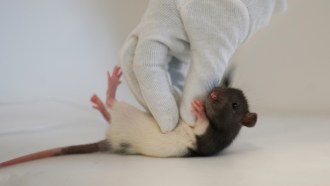
A rat’s playfulness relies on cells in one part of its brain
Certain cells here control its behavior. Studying this circuitry could also help us understand depression in people.
- Animals
A new technique creates glowing whole-body maps of mice
Removing cholesterol from mouse bodies lets fluorescent proteins seep into every tissue. That has helped researchers map entire body parts.
- Animals
Analyze This: White wing spots may help monarch butterflies fly far
Monarchs with more white on their wings are more successful migrants, new research shows
- Health & Medicine
High blood pressure can affect kids but often goes undiagnosed
Left untreated, it can lead to lasting problems, even in kids who appear otherwise healthy. Learn the signs and what to do.
- Health & Medicine
Explainer: High blood pressure stresses the heart and blood vessels
Because it can be dangerous, doctors should regularly screen for it even in young kids and teens — but often don’t.