HS-LS2-2
Use mathematical representations to support and revise explanations based on evidence about factors affecting biodiversity and populations in ecosystems of different scales.
- Health & Medicine
Four summer camps show how to limit COVID-19 outbreak
Schools might take a lesson from these overnight facilities in Maine. They kept infection rates low by testing a lot and grouping kids into ‘bubbles.’
- Animals
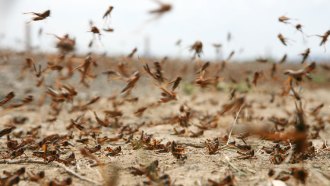
A single chemical may draw lonely locusts into a hungry swarm
Swarms of locusts can destroy crops. Scientists have discovered a chemical that might make locusts come together in huge hungry swarms.
- Animals
Are coyotes moving into your neighborhood?
How do coyotes survive in New York City, Los Angeles and Chicago? Researchers and citizen scientists are working together to find answers.
- Microbes
Some deep-seafloor microbes still alive after 100 million years!
Some starving microbes nap while awaiting their next meal. For some living miles below the ocean surface, that nap may exceed 100 million years.
- Animals
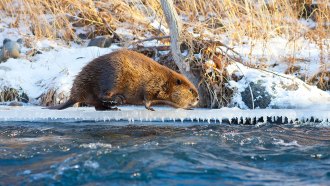
Busy beavers may be speeding thaw of Arctic permafrost
As climate change continues, busy beavers are expanding their range in Alaska. Their dams could further speed the loss of permafrost there and promote local warming.
- Environment
Dust can infect animals with flu, raising coronavirus concerns
Dust particles kicked up from some virus-contaminated surface can become a source of new infections, rodent data show.
- Agriculture
Pesticides contaminate most food of western U.S. monarchs
Monarch caterpillars eat only milkweeds. A new study finds widespread pesticide use has tainted these plants across the insect’s western U.S. breeding grounds.
- Life
For teens, big problems may lead to meaningful research
Several teens who competed at the Regeneron Science Talent Search applied their STEM know-how to solve problems they or their communities faced.
- Genetics
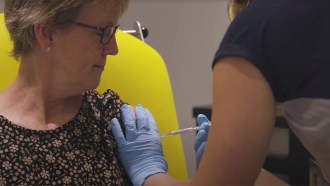
New COVID-19 vaccines show promise in people
Early data from human trials show that several candidate COVID-19 vaccines produce virus-inactivating antibodies and immune cells that fight the virus.
- Animals
What you need to know about ‘murder hornets’
Two new specimens of the world’s largest hornet have just turned up in the United States. Here’s what to make of them and other alien-hornet invaders.
- Health & Medicine
Remdesivir is looking even better at fighting COVID-19
New studies suggest the drug remdesivir not only speeds recovery of COVID-19 patients in the hospital, but lowers their risk of death from the virus.
- Animals
Pooping ducks can shed the live eggs of fish
Some carp eggs survived and even hatched after being pooped by a duck. This may help explain how invasive fish reach isolated waterways.