HS-LS2-4
Use a mathematical representation to support claims for the cycling of matter and flow of energy among organisms in an ecosystem.
- Agriculture
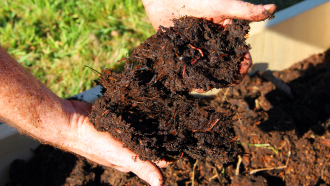
Healthy soils are life-giving black gold
Scientists explain why everyone needs to value the soils beneath our feet — and why we should not view them as dirt.
- Animals
Jumping ‘snake worms’ are invading U.S. forests
These bad-news invaders are spreading across the United States. As they turn forest debris into bare ground, soils and ecosystems are changing.
- Climate
The faster trees grow, the younger they die
As climate change spurs forest tree growth, it also shortens trees’ lives. That results in a quicker release of climate-warming carbon back into the atmosphere.
- Animals
Whales get a second life as deep-sea buffets
When a whale dies and sinks to the seafloor, it becomes a feast for hundreds of different types of creatures.
-
A dirty and growing problem: Too few toilets
As the famous book says, everybody poops. That’s 7.8 billion people, worldwide. For the 2.4 billion with no toilet, the process can be complicated.
- Environment
Greener than burial? Turning human bodies into worm food
Composting human bodies yielded good results — and good soil — in one small study. It could become an alternative to burial or cremation in one state.
- Ecosystems
Small swimmers may play huge role in churning the seas
Hoards of migrating shrimp and krill can cause large-scale water movements in the ocean, a new study suggests.
- Climate
Analyze This: Climate change could make food less healthy
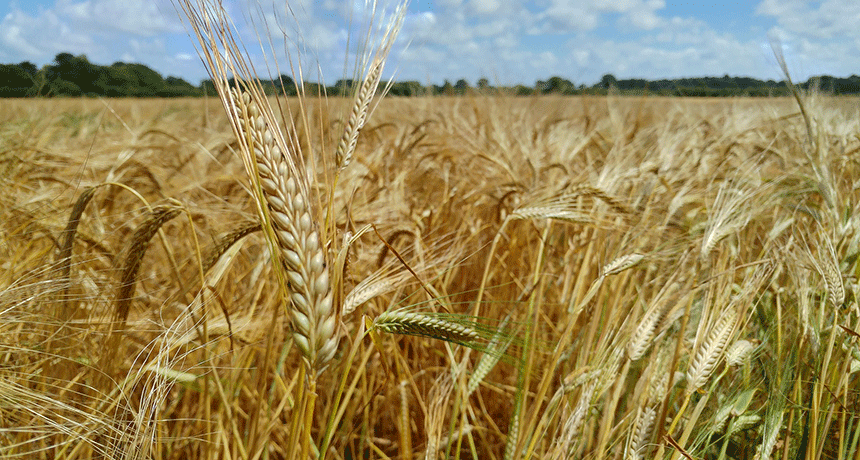
Levels of important nutrients are lower in crops exposed to high levels of carbon dioxide, a greenhouse gas. How high? Try levels expected to be typical 30 years from now.
- Genetics
Cool Jobs: New tools to solve crimes
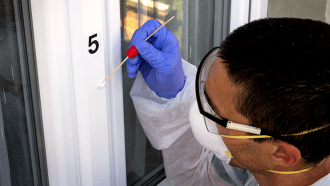
Future investigators may identify criminals by the microbes they leave behind or by using DNA-like evidence from strands of their hair.
- Agriculture
Sheep poop may spread poisonous weed
Fireweed is a poisonous plant in Australia. Sheep can eat it without hurting themselves. But a teen found those sheep may be spreading more weeds.
- Animals
Industrious badger caught burying an entire cow
Badgers are known to bury small animals. That allows them to save a meal for future dining. Now researchers have caught them caching something much bigger: young cows.
- Environment
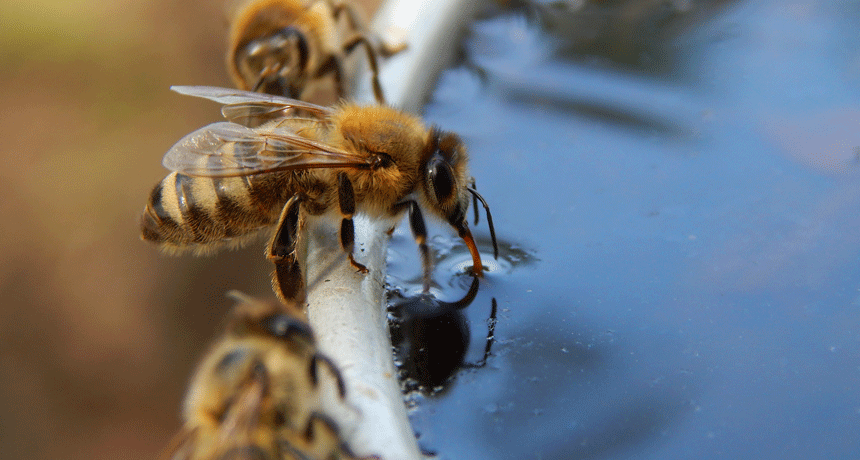
Cleaning up water that bees like to drink
Plant roots suck up pesticides used on soils, then release them into water that can seep from their leaves. This is a sweetened water that bees love to sip. A teen figured out how to remove most of the pesticide with bits of charcoal.