HS-LS2-8
Evaluate the evidence for the role of group behavior on individual and species' chances to survive and reproduce.
- Animals
Australian fires have imperiled up to 100 species
As massive wildfires consume huge swaths of Australia’s bush, untold species — many of them found nowhere else — are now threatened with extinction.
- Animals
Why some whales become giants and others are only big
Being big helps whales access more food. But just how big a whale can get is influenced by whether it hunts or filter-feeds.
- Brain
Scientists’ brains shrank after a long stay in Antarctica
The isolation of a long-term mission at an Antarctic research station shrunk part of crew members’ brains, a small study suggests.
- Health & Medicine
Globetrotting microbes in airplane sewage may spread antibiotic resistance
Along with harder-to-kill microbes, airplane sewage contains a diverse set of the genes that let bacteria evade antibiotics.
- Brain
Surprise! Exam scores benefit from months of regular sleep
Getting enough consistent, quality sleep accounted for nearly a fourth of the differences in students’ exam scores in class.
- Animals
Whales echolocate with big clicks and tiny amounts of air
Toothed whales may echolocate using bits of air that they recycle inside their heads to conserve both air and energy.
- Brain
As teens gain weight, they find high-fat foods less pleasurable
Teens who gained excess weight showed less activity in the brain’s reward center when viewing or tasting foods with lots of fat.
- Health & Medicine
By the numbers: How infectious measles and other diseases spread
A number called R0 measures how contagious an infectious disease is. It helps explain why measles is so dangerous.
- Life
Explainer: Prokaryotes and Eukaryotes
Prokaryotes tend to be small and simple, while eukaryotes have embraced a highly organized lifestyle. These divergent approaches to life have both proved very successful.
- Animals
Hunting hidden salamanders with eDNA
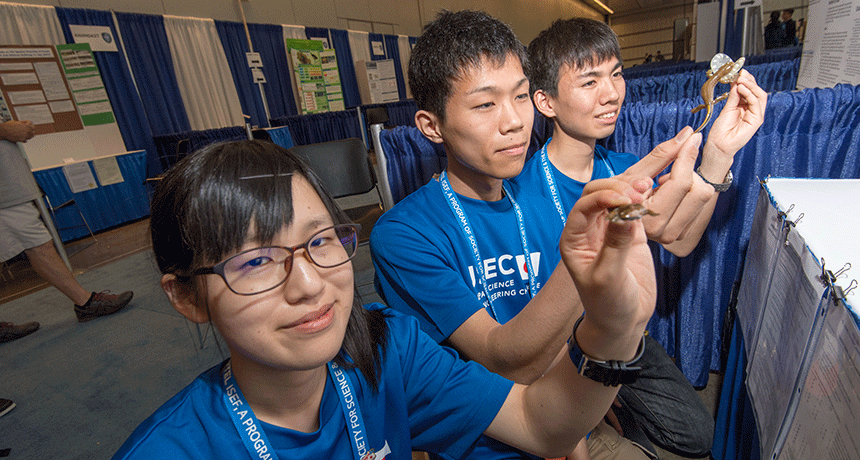
The Japanese clouded salamander is an elusive beast. To find a new population, three teens turned to high-tech methods.
- Animals
‘Boot camp’ teaches rare animals how to go wild
Animals raised in captivity cannot safely re-enter the wilds without first understanding how to find food and avoid becoming a predator’s lunch. Scientists are helping some species learn this.
- Ecosystems
Small swimmers may play huge role in churning the seas
Hoards of migrating shrimp and krill can cause large-scale water movements in the ocean, a new study suggests.