HS-LS2-8
Evaluate the evidence for the role of group behavior on individual and species' chances to survive and reproduce.
- Animals
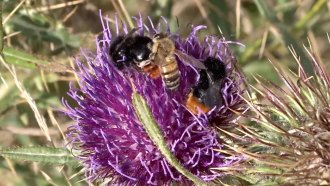
Pollen-seeking honeybees sometimes turn to theft
Observations of honeybee pollen theft from bumblebees suggest it may be a crime of convenience, based on ease of access to the prized food.
- Animals
Which way is up? Insects may lose track near artificial lights
Flying insects may use light to figure out where the sky is. But artificial lights can send them veering off course, high-speed video suggests.
- Animals
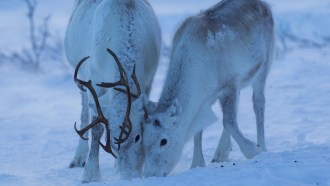
Reindeer can chew food in their sleep
Brain waves and behaviors suggest that reindeer can doze while chewing.
- Plants
Scientists Say: Marcescence
Autumn turns to winter, yet some trees' dead leaves keep hanging on.
- Animals
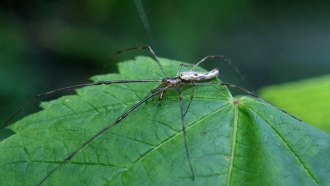
Spiders that fall into water use reflected light to find land
When elongate stilt spiders fall into water, they head for areas that don’t reflect light, studies show. This cue appears to signal dry land.
- Animals
Swimming in schools lets fish save lots of energy
Each tail flap uses less than half as much energy than swimming solo, making it easier for fish to catch their breath after an underwater sprint.
- Animals
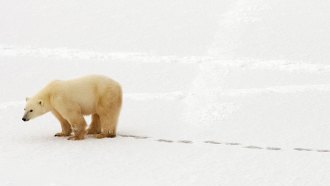
Paw-print DNA lets scientists track out-of-sight polar bears
This environmental DNA can aid in conserving species that are hard or dangerous to observe.
- Life
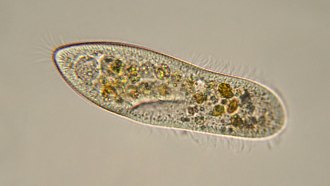
Scientists Say: Protist
Unified by a few key traits, these diverse organisms come in all shapes and sizes.
- Animals
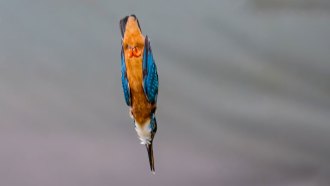
Here’s how kingfishers avoid concussions during high-speed dives
Understanding the genetic adaptations that protect the birds’ brains as they dive might one day offer clues to protecting human brains.
- Animals
Horned lizards and snakes tend to ambush their prey
The reptiles’ horns could help or hinder during foraging, depending on how they hunt. This might be why horns evolved in some species and not others.
- Animals
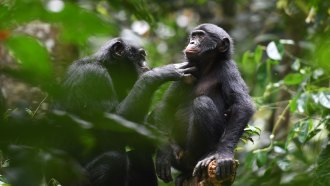
Bonobos cooperate across social groups — even with no clear payoff
Bonobos cooperate with outsiders, even when they get no clear benefit out of it. This could shed light on social evolution in other primates, even us.
- Oceans
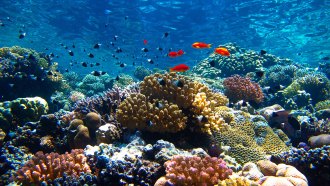
Shading corals during midday heat can limit bleaching
Shading coral reefs during the sunniest part of the day may help corals survive marine heat waves.