Matter and Its Interactions
- Materials Science
A better way to stop a bullet?
A teen researcher's tests suggest that fabric body armor might stop bullets better if it were woven using a three-fiber, triangular mesh instead of the typical two-fiber-mesh configuration.
- Physics
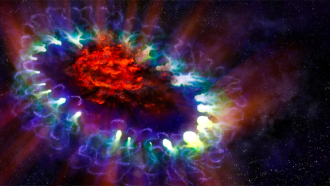
After 30 years, this supernova is still sharing secrets
It’s been 30 years since astronomers first witnessed the stellar explosion known as SN 1987A. Today, researchers are still learning from this cataclysmic phenomenon.
- Materials Science
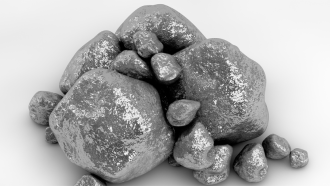
Nanowires made from silver are super stretchy
When silver nanowires stretch slowly, atoms on their surface can spread to heal weak spots. The discovery could lead to more flexible electronics.
- Earth
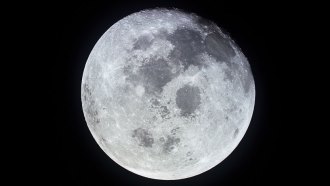
How Earth got its moon
How did our moon form? Scientists are still debating the answer. It may be the result of some one big impact with Earth — or perhaps many small ones.
- Physics
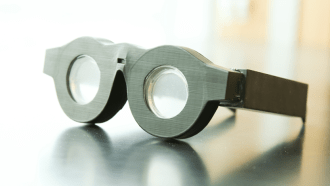
Auto-focus eyeglasses rely on liquid lenses
Engineers have designed what could be the last eyeglasses anyone would need. Right now, they’re bulky but smart. Liquid lenses are key to their adjustability — and those lenses focus automatically.
- Chemistry
Did your burger come with a side of non-degrading pollutants?
Perfluorinated compounds pollute the environment and might harm human health. A new study shows that one place they often show up is the paper and cardboard used to package fast foods.
- Science & Society
Will we know alien life when we see it?
The hunt is on for extraterrestrials. But recognizing them may require some wiggle room in what we define as being alive.
- Animals
Cool Jobs: A world aglow
Three scientists probe how the natural world makes light, in hopes of using this information to design new and better products.
- Chemistry
Explainer: What is a catalyst?
Catalysts are used in manufacturing and many technologies. They’re also found in living things. They help chemical reactions move along.
- Physics
How to chill an object by sending its heat into space
Researchers have designed a device that can cool an object by radiating its energy into outer space. Think of it as a solar panel in reverse.
- Chemistry
How to spin synthetic spider silk
A new method for spinning artificial spider silk combines parts of proteins from two species and mimics what happens in a spider’s silk-forming gland.
- Chemistry
Here’s how hot water might freeze faster than cold
There’s a new explanation for how hot water freezes faster than cold water. But not everyone agrees it’s right, or that the effect can happen at all.