Physics
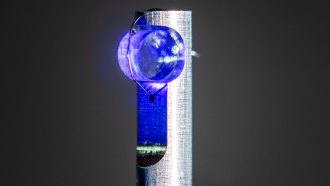
Scientists made clocks from an atomic nucleus
These super high-tech timepieces use the chemical element thorium to keep time. And as the clocks improve, they could help solve some mysteries in physics.
Come explore with us!
These super high-tech timepieces use the chemical element thorium to keep time. And as the clocks improve, they could help solve some mysteries in physics.
Production of this potent greenhouse gas is triggered by a newfound feature of these microbes — one with a funny name: hydrogenobody.
Attempting to cut a light particle in half would spawn up to infinite new photons, a new model shows.
This electrically charged form of fluorine boasts powerful tooth-strengthening abilities.
Scientists are testing whether plastic pollution from the ocean can be transformed into safe and durable highways.
It registers nails' touch by disrupting the touchscreen’s electric field. But this high-tech varnish isn’t ready to hit store shelves yet.
Solid at room temp, the natural trans fat conjugated linoleic acid resembles saturated fats — except that it appears good for the body in many ways.
New U.S. dietary guidelines promote eating full-fat dairy and meats. But health experts say nuts and seed oils are better sources of the two crucial fats we need.
Packed with chemical additives, these foods have become a major part of our diets. Scientists have begun to worry about how ultraprocessed foods may impact health.
To understand the universe, we must look to entropy — the chaos engine of the cosmos.