MS-LS4-4
Construct an explanation based on evidence that describes how genetic variations of traits in a population increase some individuals' probability of surviving and reproducing in a specific environment.
- Animals
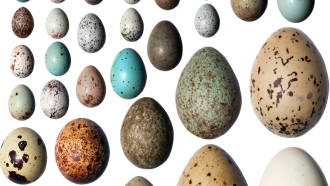
Why are bird eggs in cold climates darker colored?
A global survey of bird egg color has revealed a simple trend: the colder the climate, the darker the egg.
- Animals
Blood vessels in their heads kept big dinos from overheating
Giant dinosaurs evolved several ways to cool their blood and avoid heatstroke.
- Animals
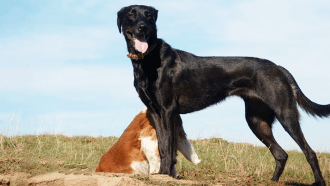
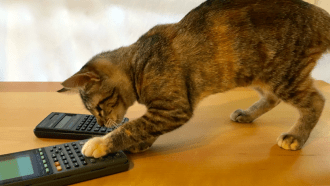
What we can — and can’t — learn from our pets’ DNA
Your dog or cat’s DNA is an open book. DNA tests tell people about their pet’s breed and attempt to predict things about its behavior and health.
- Animals
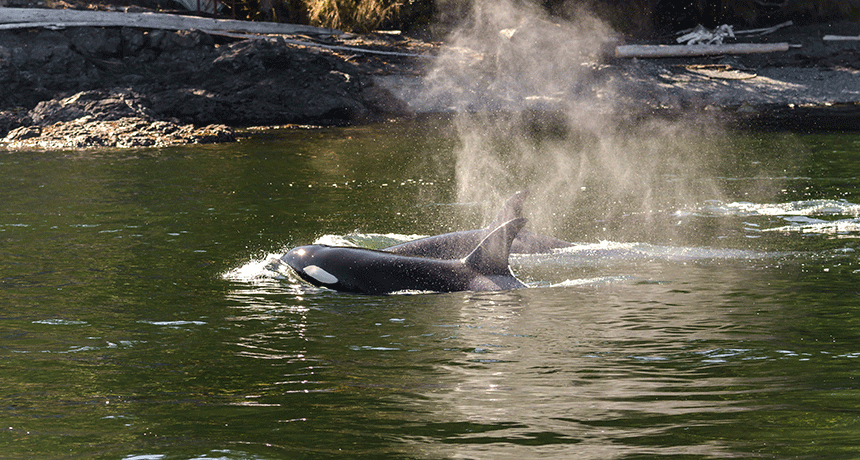
Orca snot leads to a whale of a science-fair project
DNA found in the mucus of orcas suggests that even though the traits of family pods may differ, these marine mammals all appear to belong to a single species.
- Genetics
Explainer: How CRISPR works
Scientists are using a tool called CRISPR to edit DNA in all types of cells.
- Animals
These killer whales exhale sickening germs
A group of endangered killer whales are exhaling disease-causing germs. Researchers worry these microbes could make the animals sick.
- Fossils
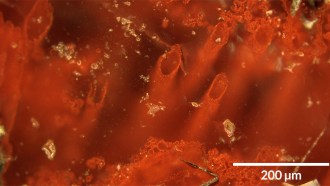
Fossils offer new candidate for earliest life
Rock unearthed in Canada appears to hold fossils from seafloor microbes that would have lived around 4 billion years ago, when Earth was very young.
- Animals
Animals can do ‘almost math’
Humans aren’t the only animals with a number sense. Scientists are trying to figure out where and when it evolved.
- Animals
Speckled dino spurs debate about ancient animals’ colors
Structures found in fossil dinosaur skin may give clues to the creatures’ colors and how they lived. But not all scientists agree on how to interpret what they see.
- Animals
Tasmanian devils begin to resist infectious cancer
A deadly contagious cancer is spreading among Tasmanian devils. But the animals are evolving resistance, a new study finds.
- Life
Scientists watch germs evolve into superbugs
To study how bacteria can evolve resistance to a wide variety of drugs, scientists spread the germs on a food-filled plate the size of a foosball table. Then, they watched resistance rise.
- Animals
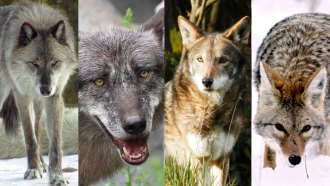
Wolf species shake-up
A genetic study says red wolves and eastern wolves may really be mixtures of coyotes and gray wolves, not distinct species.