MS-PS1-2
Analyze and interpret data on the properties of substances before and after the substances interact to determine if a chemical reaction has occurred.
- Chemistry
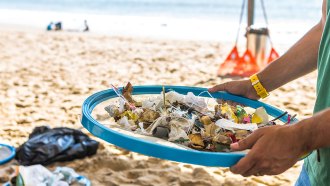
A new way to make plastics could keep them from littering the seas
Borrowing from genetics, scientists are creating plastics that will degrade. They can even choose how quickly these materials break down.
- Microbes
Genes point to how some bacteria can gobble up electricity
A new study shows how some microbes absorb and release electrons — a trait that may point to new fuels or ways to store energy.
- Chemistry
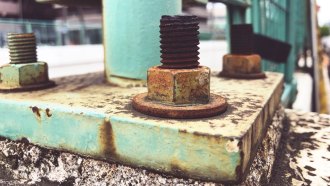
Scientists Say: Oxidation and Reduction
Oxidation and reduction are two parts of a chemical process in which one atom steals electrons from another.
- Chemistry
Explainer: What is an electrode?
An electrode’s name depends on the circumstances. Confused? It may help to consider which electrochemical reaction is natural — and which is not.
- Chemistry
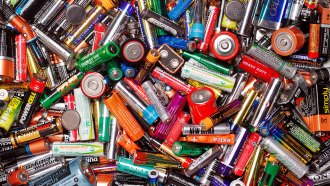
Explainer: Ions and radicals in our world
When atoms get an electric charge, they act very differently. Now called ions, these are behind many aspects of chemistry, including acids and batteries.
- Chemistry
Sleep-friendlier lighting is on the way
Chemists have created a new glowing material for LEDs. It should lessen how much near-bedtime lighting impairs your ability to nod off.
- Planets
The Perseverance rover split CO2 on Mars to make breathable air
This oxygen-making experiment shows that astronauts could one day make air to breathe and to help fuel their ride back home.
- Chemistry
Scientists Say: Metal
Metals are substances that can be elements, alloys or compounds. They all conduct heat and electricity and can be formed into different shapes.
- Chemistry
Scientists Say: Alkaline
Alkaline chemicals are basic — substances that produce hydroxide ions in solution.
- Chemistry
Extreme pressure? Diamonds can take it
Diamond retains its structure even at extreme pressures, which could reveal how carbon behaves in the cores of some exoplanets.
- Chemistry
A new catalyst turns greenhouse gas into jet fuel
The catalyst is an improvement over its predecessors. Made of cheap materials like iron, it produces jet fuel in a single step.
- Chemistry
A soil-based ‘concrete’ could make buildings green, even on Mars
A new soil-based material offers an alternative to concrete for 3-D printing environmentally friendly buildings.