MS-PS1-2
Analyze and interpret data on the properties of substances before and after the substances interact to determine if a chemical reaction has occurred.
- Chemistry
Explainer: What are polymers?
Polymers, whether natural or artificial, are big molecules made by linking up smaller repeating chemical units. The most common “backbones” for polymers are chains of carbon or silicon, each of which can bond to four other atoms.
- Physics
Explainer: Quantum is the world of the super small
The word quantum often gets misused. What does it mean? Think small. Really, really small.
- Chemistry
Scientists Say: Catalyst
Sometimes a chemical reaction can take a while. If speed is needed, a catalyst can help.
- Chemistry
Trees can make summer ozone levels much worse
The greenery can release chemicals into the air that react with combustion pollutants to make ozone. And trees release more of those chemicals where it gets really hot, a new study finds.
- Chemistry
BPA-free plastic may host BPA-like chemical, teen finds
Something has to replace the BPA in ‘BPA-free’ plastics. A teen has been probing what that is.
- Health & Medicine
This mix turns pink when sunscreen wears thin
Many people know to put on sunscreen. Remembering to put more on is harder. A teen invented an indicator that glows pink when it’s time to reapply.
- Physics
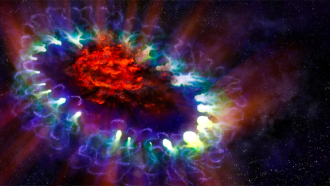
After 30 years, this supernova is still sharing secrets
It’s been 30 years since astronomers first witnessed the stellar explosion known as SN 1987A. Today, researchers are still learning from this cataclysmic phenomenon.
- Earth
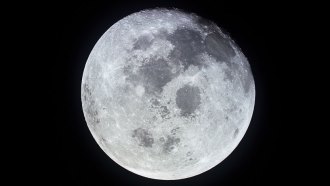
How Earth got its moon
How did our moon form? Scientists are still debating the answer. It may be the result of some one big impact with Earth — or perhaps many small ones.
- Animals
Cool Jobs: A world aglow
Three scientists probe how the natural world makes light, in hopes of using this information to design new and better products.
- Physics
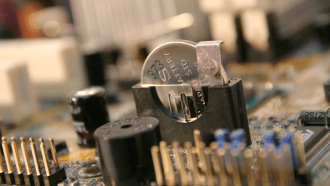
Explainer: How batteries and capacitors differ
Both batteries and capacitors can power electronic devices. Each, however, has different properties which may provide benefits — or limitations.
- Computing
LEDs offer new way to kill germs in water
Growing ultraviolet-light-emitting diodes on thin, flexible sheets of metal holds promise for water disinfection and other applications.
- Chemistry
Scientists Say: Unsaturated fat
These fats are found in foods like olive oil. It’s their special bonds that make them go with the flow.