MS-PS2-2
Plan an investigation to provide evidence that the change in an object's motion depends on the sum of the forces on the object and the mass of the object.
- Animals
Flying snakes wriggle their way through the air
Flying snakes go tens of meters (yards) without wings. They do it by undulating back and forth and up and down, a new study shows.
- Materials Science
Self-powered surface may evaluate table-tennis play
Scientists at the Georgia Institute of Technology built a 'smart' surface on which to play table tennis. It can track the location, speed and direction of the ball.
- Tech
Teens garner some $4 million in prizes at 2017 Intel ISEF
Hundreds of teens collectively took home about $4 million in awards from the Intel International Science and Engineering Fair this week.
- Physics
Why your shoelaces untie themselves
High-speed video shows how the combined motions of a shoe’s swinging and landing on the ground provoke shoelaces to come untied.
- Earth
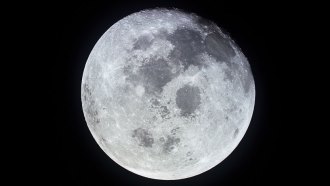
How Earth got its moon
How did our moon form? Scientists are still debating the answer. It may be the result of some one big impact with Earth — or perhaps many small ones.
- Earth
Falling through Earth might be a long and fruitless trip
A classic physics problem asks what would happen if you plunged through Earth’s center. A new study contends you could never make it to the other side.
- Physics
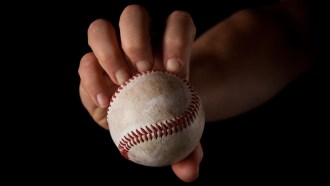
Why the knuckleball takes such a knucklehead path
They used to say it was how the seams interacted with the air. The new explanation is different. Scientists say its due to a ”drag crisis.”
- Health & Medicine
Why Paralympic sprinters have trouble with curves
Whether an artificial leg is on the right or left side of the body may affect how fast runners can take a turn.
- Physics
Einstein taught us: It’s all ‘relative’
One hundred years ago, a German physicist shared some math he had been working on. In short order, his theory of relativity would revise forever how people viewed the universe.
- Brain
Soccer: Watch out for collisions!
Scientists discover that concussions among high school soccer players stem more from aggressive contact between players than from heading the ball.
- Physics
News Brief: As timely as it gets
A newly modified atomic clock won’t lose or gain a second for 15 billion years. This timepiece is about three times more precise than an earlier version.
- Tech
Make your own mini hovercraft
Hovercraft aren’t just the cars of the future. You can make your own with just a few household items.