MS-PS4-2
Develop and use a model to describe that waves are reflected, absorbed, or transmitted through various materials.
- Animals
Lots of frogs and salamanders have a secret glow
A widespread ability to glow in brilliant colors could make amphibians easier to track down in the wild.
- Environment
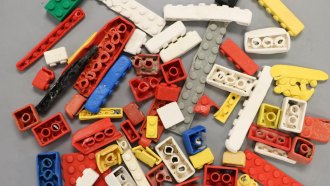
Legos could last a disturbingly long time in the ocean
By looking at toys washed up on beaches, scientists have estimated how long it takes hard plastics to break down in the oceans. And it’s a long time.
- Health & Medicine
New ultrasound treatment kills off cancer cells
Low-frequency ultrasound destroys cancer cells while leaving most healthy cells intact.
- Brain
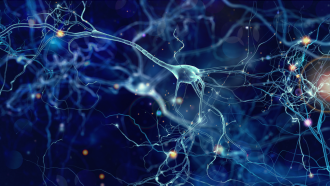
Zapping the brain may make it work right again
Sending electrical zaps to electrodes implanted deep in the brain can help people with Parkinson’s disease, depression and even obsessive-compulsive disorder.
- Earth
Newfound ‘dunes’ is among weirdest of northern lights
There’s a new aurora dubbed the 'dunes.' It’s weird and joins the ranks of black auroras, STEVE and other odd natural light shows.
- Animals
Here’s how butterfly wings keep cool in the sun
Butterfly wings sport structures that let living tissues release more heat than the rest of the wing.
- Science & Society
Science isn’t just for scientists
It doesn’t take an advanced degree or a lab to do science. All you need is curiosity and an interest in learning something new every day.
- Physics
Explainer: Understanding waves and wavelengths
A wave is a disturbance that moves energy from one place to another. Only energy — not matter — is transferred as a wave moves.
- Climate
Study appears to rule out volcanic burps as causing dino die-offs
New data on when massive volcanic eruptions happened do not match when the dinosaur mass extinction took place.
- Animals
Analyze This: Shimmering colors may help beetles hide
Delve into data showing how brilliant colors that shift as a viewer — or predator — moves may help iridescent insects blend in.
- Health & Medicine
Experts rethink need for X-ray shielding of patients
For close to 70 years, workers who perform X-ray scans of the body have been advised to shield sensitive tissues with lead 'aprons.' That may soon stop.
- Materials Science
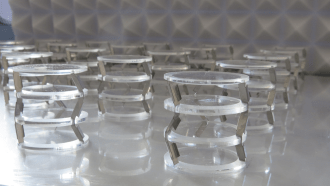
New twist can hush — even cloak — some sounds
Swiss engineers developed clear, spiral structures to make a new sound-dampening system. Those twists block some vibrations and lets others through.