MS-PS4-2
Develop and use a model to describe that waves are reflected, absorbed, or transmitted through various materials.
- Materials Science
‘Frozen smoke’ could protect electronics from annoying static
A fluffy material made from cellulose nanofibers and silver nanowires can protect electronic devices by blocking more than 99.99 percent of disrupting interference, a new study reveals.
- Climate
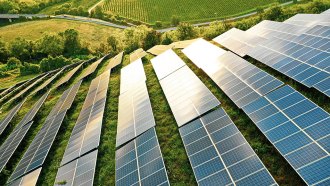
Let’s learn about solar power
Solar power is a way to harness energy from the sun, and lessen our reliance on fossil fuels.
- Health & Medicine
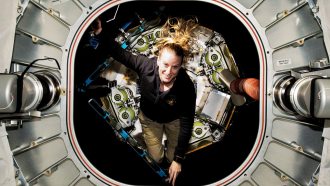
Surviving Mars missions will take planning and lots of innovation
Astronauts that go to Mars will need protection from microgravity and radiation, plus mini-medical devices to diagnose problems and manage emergencies.
- Agriculture
Student scientists work to help all of us survive a warmer world
From glaciers in the refrigerator to a rover in the field, here’s how young scientists are looking to help us adapt to climate change.
- Climate
Changing climates can take cooling tips from warm regions
When summer heat waves hit northern cities, people might look to keep cool using tropical building strategies — and forgotten architectural wisdom.
- Archaeology
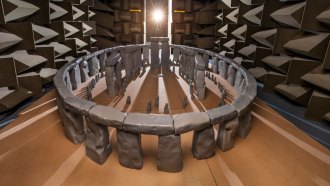
Stonehenge enhanced voices and music within the stone ring
Scientists built a 'Stonehenge Lego' model in a sound chamber to study how sound would have behaved in the ancient stone circle.
- Brain
You don’t see as much color as you think
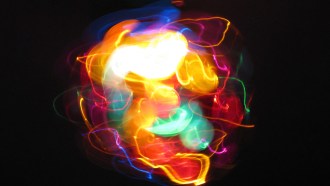
It might seem like we live in a world full of color. But when scientists flip it into black and white, most people never notice the switch.
- Planets
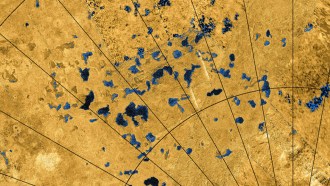
Saturn’s moon Titan may host lots of dried lakes
Suspicious spots around the moon’s middle could be the beds of ancient lakes. If so, this might solve a 20-year-old mystery.
- Physics
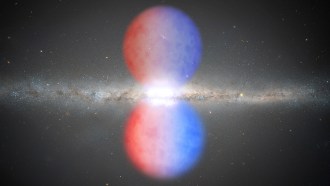
Spotted: Milky Way’s giant gas bubbles in visible light
The bubbles have different colors, based on how the gas inside them moves. That could give clues to how the bubbles developed.
- Brain
Explainer: How our eyes make sense of light
It takes a lot for images before the eyes to be 'seen.' It starts by special cells sensing the light, then signals relaying those data to the brain.
- Physics
Understanding light and other forms of energy on the move
Radiation needn’t be scary, especially if it allows us to see our family or use our cell phones. Here’s a guide to light and other types of emitted energy.
- Animals
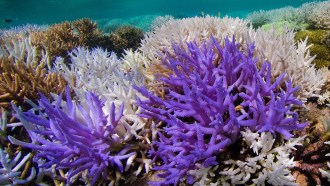
Going bright may help corals recover from bleaching
When some corals bleach, they turn neon colors. Flashy hues may be part of a response that helps these corals recover and reunite with their algae.