Life
- Chemistry
Oxygen-rich air emerged super early, new data show
Scientists had thought animals were slow to emerge because they would have needed oxygen-rich air to breathe. A new study finds that plentiful oxygen may have developed early. So animals may have been late on the scene for another reason.
- Brain
Zika can damage the brains of even adults
The Zika virus can damage a developing baby’s brain. The infection can also kill off an important type of cells in adult brains, a new mouse study finds.
- Animals
Got milk? Roach milk could be a new superfood
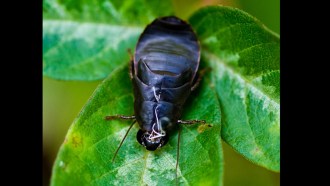
Scientists have just figured out the recipe for cockroach milk. And that could be a first step toward making it part of the human diet. Yum!
- Agriculture
The first farmers were two groups, not one
The humans that began farming 10,000 years ago in the Fertile Crescent may have been two cultures living side-by-side.
- Animals
Wolf species shake-up
A genetic study says red wolves and eastern wolves may really be mixtures of coyotes and gray wolves, not distinct species.
- Genetics
How fake sugar can lead to overeating
Scientists have found that fruit flies and mice eat more after consuming food laced with a popular fake sugar.
- Earth
Something in plastics may be weakening kids’ teeth
The body can confuse some pollutants for a natural hormone. Researchers in France now find such pollutant exposures in childhood may lead cells to make defective tooth enamel.
- Earth
Non-scents: Pollution can confuse pollinators’ sniffers
New research uses computers to predict how much longer it takes bees and other pollinating insects to sniff out lunch in a polluted environment.
- Animals
Plants, animals adapt to city living
Cities have turned into experiments in evolution for both plants and animals, from the taste of clover to the stickiness of lizards’ toes.
- Genetics
Scientists Say: DNA sequencing
All of us have our own individual DNA. Now, scientists can determine what each individual strand is made of — a process called DNA sequencing.
- Animals
End of Latin America’s Zika epidemic is in sight
A computer simulation suggests the Zika epidemic in Latin America is peaking and may not strike hard again for up to three decades.
- Animals
GM mosquitoes cut rate of viral disease in Brazil
Adults males carrying the altered gene cannot father young that survive to adulthood. That’s when they suck blood — and can transmit disease.