Life
- Animals
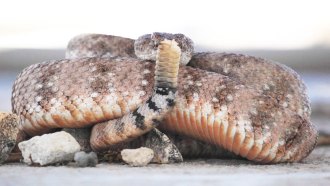
Scientists Say: Venomous
A poison-arrow frog is poisonous, but a rattlesnake is not. What’s the difference? It’s how their poisons are delivered.
- Fossils
Parasites wormed their way into dino’s gut
Tiny burrows crisscross the stomach of a 77-million-year-old dinosaur fossil. These may be tracks left behind by slimy parasitic worms.
- Animals
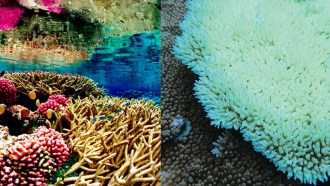
Current coral bleaching event is the longest known
Heat stress has led to the longest coral bleaching event on record. Scientists now worry that global warming may make such prolonged crises more frequent.
- Brain
Hormone affects how teens’ brains control emotions
Using scans of brain activity, scientists show that surging hormones drive where emotions get processed in a teen’s brain.
- Brain
Gasp! At the movies, your breaths reveal your emotions
Researchers took air samples as they screened movies. What people exhaled were linked to film scenes’ emotional tone, they found.
- Health & Medicine
Zika vaccines look promising
As a Zika epidemic surges through Brazil and northward, scientists are looking for drugs to keep more people from becoming infected. Several vaccines show promise in early tests — but none has yet been tried in people.
- Animals
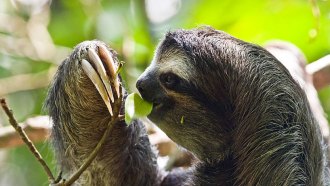
This mammal has the world’s slowest metabolism
A sloth species manages to exist with a super-slow metabolism by moving little and using its environment for heating and cooling its body.
- Animals
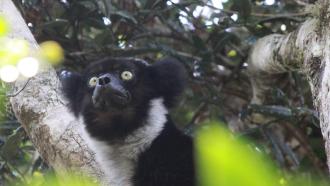
Singing lemurs sync up — until one goes solo
The indri lemurs of Madagascar sing in chorus to mark their territory. But young males sometimes solo, which may help them attract a mate.
- Animals
Snout goo may help sharks sense prey
Scientists may be one step closer to understanding how sharks sense their prey. Pores on their snout and face are lined with a gel that may help relay electrical currents created by prey’s movements.
- Animals
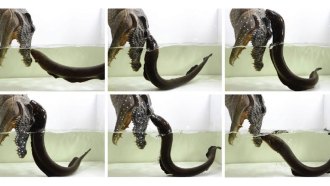
Leapin’ eels! Video shows they attack with zaps
When a predator threatens an electric eel from above, the animals leap up to deliver a shocking defense.
- Animals
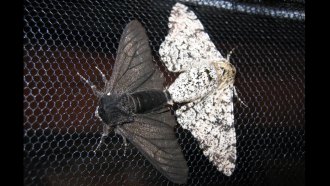
How a moth went to the dark side
Peppered moths and some butterflies are icons of evolution. Now scientists have found a gene responsible for making them so.
- Animals
The turning of wolves into dogs may have occurred twice
The process of turning wolves into dogs, called domestication, may have occurred twice — in the East and the West — ancient DNA suggest.