Life
- Animals
Analyze This: Invasive species cost the world billions each year
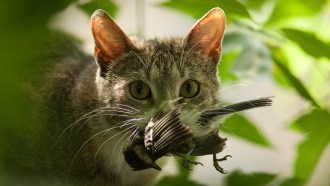
A new study estimates that invasive species have cost the world more than $1 trillion since 1970. That’s almost certainly an underestimate.
- Animals
Rhinos, camels and bone-crushing dogs once roamed Nebraska
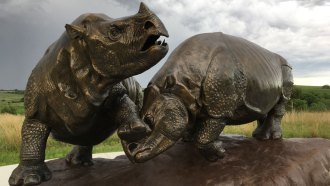
Scientists digging into the remnants of an ancient watering hole in Nebraska discovered evidence of an Africa-like savanna, complete with rhinos.
- Animals
These rabbits can’t hop. A gene defect makes them do handstands
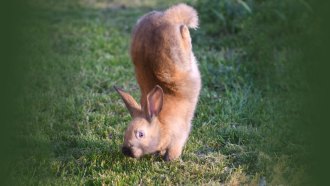
Mutations in a gene that helps nerve cells work properly rob rabbits of their ability to hop. Instead, the animals use their front paws to move.
- Animals
Explainer: What are cicadas?
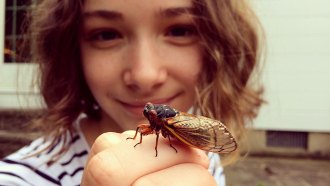
There are more than 3,000 species of cicadas, but the best known in North America are periodical cicadas, which emerge every 13 or 17 years.
- Animals
How bees play telephone to form a swarm
Honeybees use pheromones and flapping wings to tell each other where to find the queen — so they can all be together. Learn more with this web comic.
- Animals
Scientists Say: Genus
A genus is a group of closely related species. It’s the first part of the two-part system called binomial nomenclature, used to name living things.
- Climate
Urchin takeover underlies California’s vanishing kelp forests
Some 95 percent of kelp forests along its northern coast are gone. Meanwhile, sea otters are helping slow the loss of surviving kelp farther south.
- Animals
Let’s learn about dogs
From learning the names of their toys to sniffing out viruses in human sweat, dogs are far more than household pets.
- Brain
Patterns in brain activity can identify who will struggle to read
Certain patterns of brain activity predict whether teens are strong readers or will struggle. Those diagnostic patterns show up even when doing math.
- Fossils
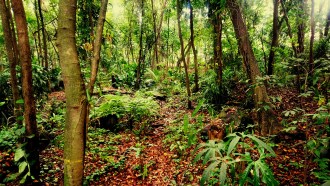
Dinosaur-killing asteroid radically changed Earth’s tropical forests
The asteroid collision initially reduced the diversity in what had been sunny tropical rainforests. In time, the forests would become permanently darker.
- Microbes
Several plant-like algae can morph into animal-like predators
Single-celled green algae swim through water as free cells. Most use only photosynthesis for their energy. But not all of them, a new study shows.
- Brain
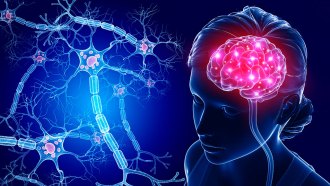
Explainer: What is a neuron?
From the moment you are born, cells called neurons sense information, process it and then pass it on. Neurons allow you to do everything that you do.