Life
- Animals
Scientists Say: Apoptosis
When it’s time for cells to die, they need to do it carefully, so they don’t harm other cells.
- Animals
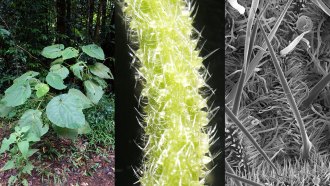
Please do not touch the Australian stinging tree
Stinging-tree leaves look soft and inviting, but one touch delivers agony. Structurally, the plant's painful chemical looks a lot like spider venom.
- Animals
The diabolical ironclad beetle is nearly unsquishable
The diabolical ironclad beetle is an incredibly tough little creature. A peek inside its exoskeleton reveals what makes it virtually uncrushable.
- Brain
Scientists Say: Puberty
Puberty is a time when hormones surge and people develop the ability to have children. But it’s so much more than that.
- Animals
This snake rips open a living toad to feast on its organs
A particularly gruesome way to kill may help small-banded kukri snakes avoid a deadly poison secreted from the neck and backs of some toads.
- Animals
Scientists Say: Evolution
Evolution is how species change over time. Individuals in the group vary, and some will pass on their genes. Over time, the whole species changes.
- Brain
Kids use more of the brain than adults do to process language
The brain continues to grow and mature throughout childhood. One big change occurs in which parts of the brain turn on as someone processes language.
- Animals
Analyze This: Ropes restore a gibbon highway through a rainforest
When endangered Hainan gibbons started making risky leaps across an area mowed down by a landslide, researchers provided them a rope bridge.
- Animals
Attack of the inner-cannibal mega-shark
The outsized megalodon was a fierce terror that chewed its way across the oceans. It learned to kill even before it was born.
- Animals
Jumping ‘snake worms’ are invading U.S. forests
These bad-news invaders are spreading across the United States. As they turn forest debris into bare ground, soils and ecosystems are changing.
- Brain
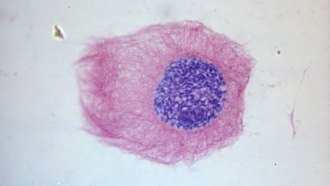
Scientists Say: Nucleus
Nucleus comes from the Latin term “nuc,” meaning nut or kernel. In science there are lots of nuclei. Every one of them is the center of something.
- Animals
When physicians and veterinarians team up, all species benefit
When doctors for people and those for animals share their expertise, they can discover new ways to take better medical care of all species.