Life
- Animals
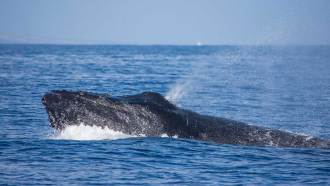
Whale blowholes don’t keep out seawater
Whales’ blowholes aren’t as protective as scientists had thought. They not only can let in water but also pollutants.
- Animals
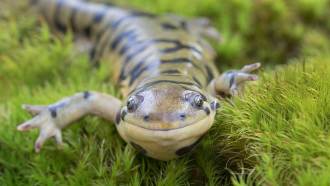
Scientists Say: Amphibian
Amphibians are ectotherms that live dual lives — they start off in water, breathing with gills, and end up breathing air with lungs.
- Life
If bacteria stick together, they can survive for years in space
Tiny clumps of bacteria can survive at least three years in outer space. This raises the prospect of interplanetary travel by microbial life.
- Ecosystems
Soggy coastal soils? Here’s why ecologists love them
Coastal wetlands can protect our shores from erosion, flooding and rising sea levels.
- Ecosystems
‘Vampire’ parasite challenges the definition of a plant
Langsdorffia are stripped down to their essentials. Lacking green leaves for photosynthesis, they steal energy and nutrients from other plants.
- Chemistry
Stinky success: Scientists identify the chemistry of B.O.
They turned up the enzyme in bacteria behind that underarm stench. Understanding how it works could pave the way to new types of deodorant.
- Animals
Quacks and toots help young honeybee queens avoid deadly duels
It’s not just ducks that quack. Honey bees do it too. They also toot. Researchers eavesdropped on hives to find out why.
- Brain
A secret of science: Mistakes boost understanding
Everyone makes mistakes. It turns out that how you view them says a lot about how — and how much — you’ll learn.
- Science & Society
Top 10 tips on how to study smarter, not longer
Here are 10 tips — all based on science — about what tends to help us learn and remember most effectively.
- Animals
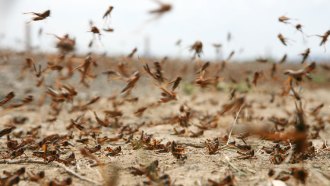
A single chemical may draw lonely locusts into a hungry swarm
Swarms of locusts can destroy crops. Scientists have discovered a chemical that might make locusts come together in huge hungry swarms.
- Animals
Some beetles can be eaten by a frog, then walk out the other end
After being eaten by a frog, some water beetles can scurry through the digestive tract and emerge on the other side — alive and well.
- Animals
Are coyotes moving into your neighborhood?
How do coyotes survive in New York City, Los Angeles and Chicago? Researchers and citizen scientists are working together to find answers.