Life
- Animals
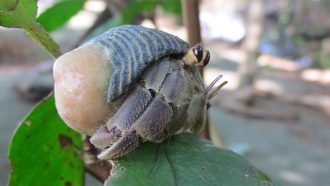
Hermit crabs are drawn to the smell of their dead
A new study finds that the smell of hermit-crab flesh attracts other hermit crabs desperately looking for a larger home.
- Animals
Life on Earth is mostly green
A new survey of life on Earth finds that plants and microbes dominate. But even though humans are in the minority, they still play a major role.
- Life
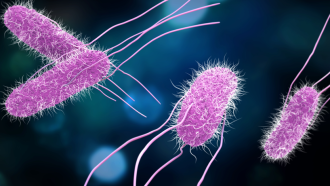
Explainer: Prokaryotes and Eukaryotes
Prokaryotes tend to be small and simple, while eukaryotes have embraced a highly organized lifestyle. These divergent approaches to life have both proved very successful.
- Animals
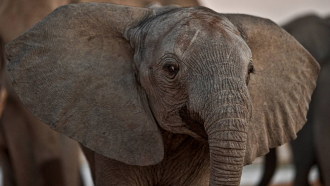
Could an elephant ever fly?
Dumbo is known as the only elephant to take flight. He’s not real. But could he be?
- Fossils
Mini tyrannosaur fills big evolutionary gap
A newfound dinosaur named “omen of doom” fills a gap in tyrannosaur evolution. It helps to narrow when the group sized up.
- Brain
What part of us knows right from wrong?
Our conscience may have evolved from our need to cooperate. Scientists are learning where the brain’s moral centers are, and how they make us human.
- Health & Medicine
Fevers can have some cool benefits
Fever boosts the immune system by zipping germ-busting cells to the site of an infection, new data show.
- Animals
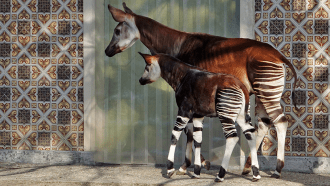
Scientists Say: Okapi
Okapis are African mammals that look a bit like horses and a bit like zebras. But they’re most closely related to giraffes.
- Health & Medicine
What’s behind frequent strep throat? Consult the tonsils
A faulty immune response might explain why some kids get strep throat often, new data show. Another problem: The diagnosis may a case of mistaken identity.
- Climate
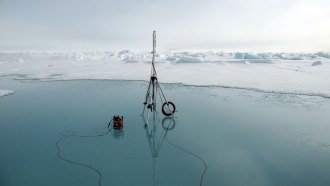
Disappearing sea ice could disrupt Arctic’s food web
When sea ice goes missing in the Arctic, every part of the ecosystem feels the effects.
- Animals
Bones show ancient marine reptile was a big baby
A new study of a rare baby plesiosaur reveals that these marine reptiles were huge at birth, then continued to grow speedily.
- Animals
Bee parasite is more werewolf than vampire
Inventing fake bee larvae prompts scientists to rethink how a mite — ominously named Varroa destructor — does its damage.