All Stories
- Animals
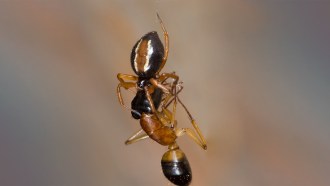
This acrobatic spider flips for its food — literally
An acrobatic hunting trick lets the Australian ant-slayer spider catch prey twice its size, a new study shows.
- Life
Let’s learn about modern Frankensteins
Modern scientists are creating strange new combinations of living tissue and trying to give dead things new life.
- Space
NASA’s DART spacecraft successfully bumped an asteroid onto a new path
The spacecraft’s intentional crash into an asteroid changed the space rock’s orbit by more than 30 minutes — far more than expected.
- Health & Medicine
Scientists Say: Liver
This organ in the upper-right side of the belly does many essential jobs, such as cleaning blood and producing bile.
- Health & Medicine
How sunshine may make boys feel hungrier
Males eat more on long summer days, but females do not. Hormones may explain this difference.
- Tech
Can computers think? Why this is proving so hard to answer
In 1950, Alan Turing proposed a test to tell a human from a computer. Today, that Turing test may tell us more about ourselves than about machines.
- Space
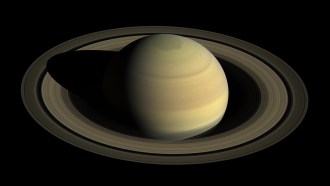
A missing moon could have given Saturn its rings — and tilt
The hypothetical moon is being called Chrysalis. It could have helped tip the planet over before getting shredded to form Saturn’s rings.
- Animals
Award-winning photo captures ‘zombie’ fungus erupting from a fly
The winner of the 2022 BMC Ecology and Evolution photo competition captures the cycle of life and death in the Amazon rainforest in Peru.
- Humans
What does charred ancient poop reveal about early animal-raising?
Evidence from the dung may push the onset of animal raising back 2,000 years earlier than previously thought.
- Genetics
For some kids, their rock-star hair comes naturally
A variant of a gene involved in hair-shaft formation was linked to most of the uncombable-hair-syndrome cases analyzed in a recent study.
- Chemistry
Lego-like way to snap molecules together wins 2022 chemistry Nobel
This so-called ‘click chemistry’ allows scientists to build complex molecules in the lab and in living cells.
- Animals
Science is just starting to understand what animals feel
Animal-welfare researchers are studying the feelings and experiences of horses, octopuses and more.