All Stories
-
- Space
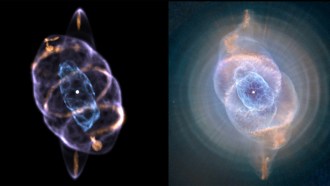
Jets may have sculpted rings of Cat’s Eye nebula
The Cat’s Eye nebula is one of the most complex of its kind. A 3-D model now reveals the source of that complexity.
- Tech
A shape-shifting robotic tooth-cleaner might one day brush for you
A swarm of billions of magnetic, bacteria-killing nanoparticles can be shaped into bristles to fit any surface, including between teeth.
- Psychology
Why fandom feels good — and may be good for you
Psychologists and media scholars are looking into the who, why and how of becoming a fan.
- Chemistry
Could we make vibranium?
The ‘perfect’ metal may belong to the fictitious Marvel world of Wakanda, but scientists hope to one day mimic some of its key traits.
- Climate
Warming temps could turn some blue lakes green or brown
Slightly warmer summers could cause thousands of blue lakes to become a murky green or brown, according to a tally of color in 85,000 lakes worldwide.
- Animals
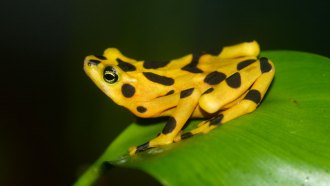
Some spikes in malaria cases may be tied to amphibian die-offs
Amphibian deaths from a fungal disease may have led to more mosquitoes — and an increase in malaria cases in Costa Rica and Panama.
- Physics
Scientists Say: Neutron
Neutrons are one of the main building blocks of atoms and have no electric charge.
- Materials Science
These fabrics change color as they stretch
Stretchy, color-shifting cloth may lead to new art, fashions and sensors. A century-old Nobel-prize-winning invention served as its inspiration.
- Health & Medicine
How wriggling, blood-eating parasitic worms alter the body
Parasitic worms eat blood and make people sick, but they may also help prevent or treat some diseases.
- Animals
How to turn your hobby into a seriously cool science project
This year’s Broadcom MASTERS finalists were inspired by their love of painting, horseback riding and other pastimes.
- Fossils
Dinosaur ‘mummies’ may not be as rare as once thought
Bite marks found on a fossilized dino show that skin can be preserved even when a carcass is not immediately smothered by sediment.