All Stories
- Animals
Let’s learn about parasites that create zombies
Some parasites turn their victims into mindless puppets that do the parasites’ bidding, even at the cost of their own lives.
- Earth
Scientists Say: Pole
A pole is either of two opposite ends of a molecule, magnet, battery, planet or other object.
- Animals
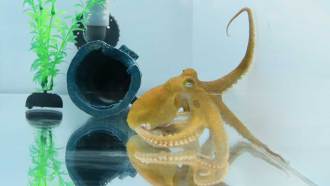
Analyze This: Octopuses may use favorite arms for grabbing meals
Understanding how octopuses control all their arms could provide clues for engineers building soft robots.
- Science & Society
What’s the fun in fear? Science explores the appeal of scary movies
On its face, the appeal of horror doesn’t make much sense. But scientists are starting to uncover who’s most likely to enjoy scary films and why.
- Physics
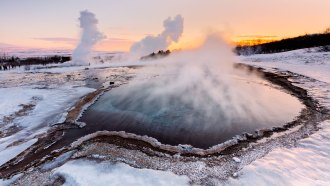
Explainer: What are the different states of matter?
Most people know solids, liquids and gases — but what about the four other states of matter?
- Planets
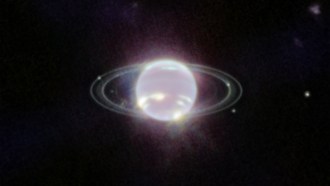
Check out the first direct look at Neptune’s rings since the ’80s
The Voyager 2 spacecraft took the first pics of Neptune’s rings 33 years ago. Now, NASA’s James Webb telescope is providing a more detailed view of them.
- Science & Society
This physicist hopes to shake up our understanding of space
Adeene Denton uses a combination of geology, astrophysics and coding to better understand the structure of planets.
- Life
Scientists Say: Fruit
Some foods usually called vegetables — such as tomatoes, cucumbers and peppers — are actually fruits.
- Animals
Sea creatures’ fishy scent protects them from deep-sea high pressures
TMAO’s water-wrangling ability protects a critter’s critical proteins — including muscle — from crushing under deep ocean pressures.
- Physics
Mysteries about the universe abound, from its beginning to its end
Scientists have a good understanding of the laws that make our universe tick. But they still don’t quite know how it began — or will end.
- Physics
It all started with the Big Bang — and then what happened?
Scientists explain what really puzzles them about how our universe became what it is today — and what its future may hold.
- Physics
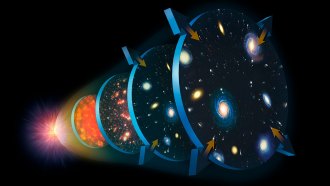
Cosmic timeline: What’s happened since the Big Bang
Energy, mass and the cosmos' structure evolved a lot over the past 13.82 billion years — much of it within just the first second.