All Stories
- Brain
Scientists Say: Cognition
Cognition is involved in all conscious mental activity, from thinking and reasoning to remembering.
- Health & Medicine
New stick-on ‘sonar’ device lets you watch your own heart beat
This wearable patch might one day make personalized medicine affordable almost anywhere in the world.
- Chemistry
Cool Jobs: Scientific glassblowers shape science
Glass has played a major role in research for centuries. Today’s artisans work at the forefront of discovery.
- Climate
Heat waves appear more life-threatening than scientists once thought
This is bad news as a warming planet leads to growing numbers of excessive heat waves — and millions more people facing potentially deadly temperatures.
- Brain
Let’s learn about reading
Reading can be fun — but it can also be really hard. New research is exploring how to make reading easier for people of all ability levels.
- Physics
This leaping robot can out-jump anything — animal or machine
Such a bounding bot might someday help explore the moon.
- Earth
Scientists Say: Humidity
Feel sticky when you step outside on a summer day? Blame humidity — water in the air.
- Space
Awesome! Here are the James Webb Space Telescope’s first pictures
The first image shows ancient galaxies. Some reveal light that has been traveling 13 billion years to reach us.
- Environment
Wildfire smoke seems to pose its biggest health risk to kids
New studies, some of them in young monkeys, point to vulnerabilities affecting kids' airways, brains and immune systems.
- Climate
Western wildfire smoke poses health risks from coast to coast
As wildfires become more common, their hazardous smoke is sending East Coast residents — especially children — to emergency rooms.
- Animals
Whale sharks may be the world’s largest omnivores
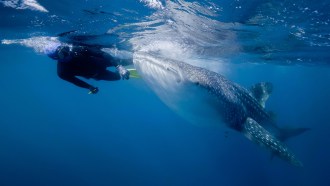
Chemical clues in the sharks’ skin show that the animals eat and digest algae.
- Tech
Engineers put a dead spider to work — as a robot
Scientists literally reanimated the dead. It’s a new research field called “necrobotics.”