All Stories
- Archaeology
Genetics show humans likely trace back to Africa
Our history began looking ever more complex once geneticists revealed our ancestors picked up new DNA as they traveled across time and continents.
- Agriculture
The ultimate genealogical search hunts for our earliest ancestors
The complex search to identify humans’ most distant cousins is long, complex and far from straightforward. It’s also far from over.
- Animals
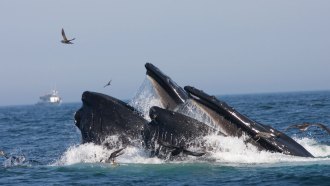
Baleen whales eat — and poop — a lot more than we thought
The amount of food that some whales eat and then poop out suggests these animals have a powerful influence over ocean ecosystems.
- Psychology
Discriminatory policing takes a toll on teens and tweens
Black teens and tweens are several times more likely than white youths their age to be harmed by police.
- Brain
Want to improve your reading skills? You might just need more space
A simple change by publishers and Web designers could help kids — both with and without dyslexia — read faster and better.
- Earth
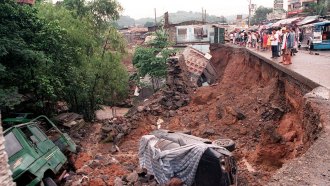
Scientists Say: Avalanche
The word avalanche usually refers to a huge snowslide down a mountain, but it can also be used to describe any large mass of material tumbling downhill.
- Ecosystems
Leaky sewer pipes pollute urban streams and bays with drugs
Scientists find that leaking sewer pipes around Baltimore, Md., spew thousands of doses of medicines into the Chesapeake Bay and other waterways.
- Plants
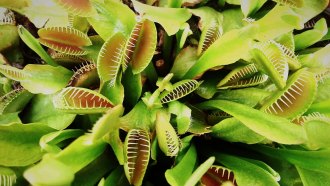
Let’s learn about meat-eating plants
Carnivorous plants use a variety of strategies to lure in and capture their prey, from sticky traps to jawlike leaves.
- Health & Medicine
Someday soon, smartwatches may know you’re sick before you do
Such an early detection of flu-like infections could tell you when to avoid others to limit the spread of disease.
- Climate
Scientists Say: El Niño and La Niña
El Niño and La Niña are part of a climate cycle that results in major weather changes every few years.
- Space
Explainer: Calculating a star’s age
Scientists can figure out a star's mass or composition pretty easily. Determining how old that star is, however, is a lot harder.
- Tech
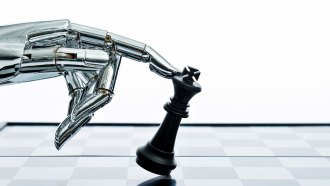
Easy for you, tough for a robot
Robots still can’t do many things that we find easy. Can engineers reduce how klutzy robots are and boost their common sense?