All Stories
- Brain
Slower brain development ups a teen’s risk of getting into a car accident
Lack of driving experience isn't the only factor in whether a teen gets into a car crash. Crash risk in young drivers is also related to development of their brains’ working memory.
- Materials Science
This device uses the cold night sky to generate electricity
A new device uses the temperature difference between Earth and outer space to create electricity after dark. Powering a lamp, it would be the ultimate night light.
- Life
Scientists Say: RNA
This is a molecule that helps cells make proteins from the instructions encoded in DNA.
- Earth
Air pollution intensifies a teen’s feeling of stress
Living where the air is dirty may make tough situations even more stressful — especially for teens suffering from anxiety or depression.
- Health & Medicine
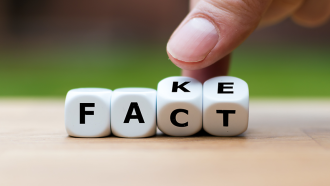
Studies test ways to slow the spread of fake news
Don’t share news online until you verify it. New studies explore who shares fake news, how to spot false stories and how to fact-check.
- Health & Medicine
Data show worrisome rise in youth vaping
Latest U.S. data show rates of vaping still on the rise among U.S. teens and middle-school students.
- Chemistry
Reversible superglue mimics snail slime
Inspired by snail slime, scientists have created the first super-strong adhesive that can be easily become unstuck, when necessary.
- Chemistry
Scientists Say: Periodic table
The periodic table is a chart showing all the known chemical elements. An element’s location in the table reveals a lot about its chemistry.
- Chemistry
Cool Job: One green chemist is mining zoo dung for biological helpers
Her goal is to convert farm-field wastes into useful fuels and chemicals
- Earth
Cool Job: This ecologist is studying an ocean of changes
A young marine ecologist is studying how warming is changing the oceans and what people can do to minimize the harm.
- Animals
Could Wednesday Addams really jolt a frog back to life?
A spark that recalls some science history brings a dead frog to life in The Addams Family. Scientists are now using electricity to build the body.
- Brain
The color of body fat might affect how trim people are
Brown fat burns calories to keep us warm. Researchers are searching for ways to boost it to help fight obesity and diabetes.