All Stories
- Space
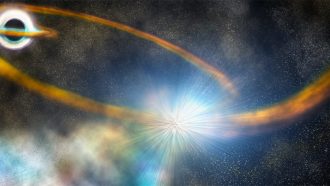
A black hole slashed a star apart — and was caught in the act
Scientists have gotten their earliest look yet at a black hole ripping up a star.
- Chemistry
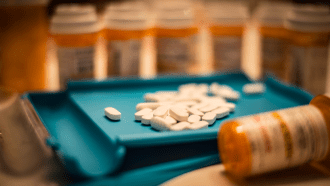
Leftover opioids? Teen finds possible way to kill such pills
Mercedes Randhahn, 14, of Ogden, Utah, came up with a possible way to chemically deactivate unused opioid pills. Her research paved the way to a $2,500 prize.
- Chemistry
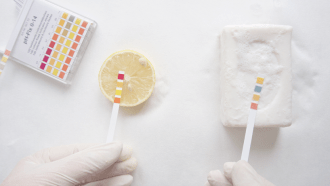
Explainer: What are acids and bases?
These chemistry terms tell us if a molecule is more likely to give up a proton or pick up a new one.
- Earth
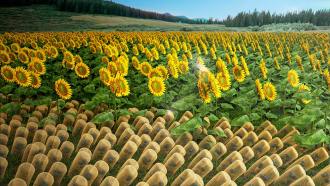
Sunflower-like rods could boost efficiency of solar collectors
A new material bends to follow the sun. Rods made from it could soak up far more of the sun’s light than ordinary solar collectors.
- Planets
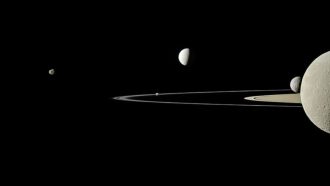
Saturn now reigns as the solar system’s ‘moon king’
Saturn now boasts at least 82 moons, surpassing Jupiter’s 79 natural satellites.
- Earth
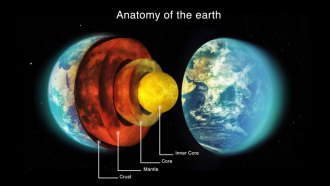
Explainer: Earth — layer by layer
Explore the sizzling heat, unimaginable pressures — and some surprise diamonds — that sit beneath our feet. This is the side of Earth that you can’t see.
- Space
Scientists Say: Black hole
This is an object in space with such a strong gravitational pull that nothing, not even light, can escape
- Health & Medicine
Health risks are scaring some teen vapers into considering quitting
As teens learn of serious — and sometimes lethal — risks associated with vaping, many are looking to quit their e-cig use. The challenge is finding groups able to help them.
- Tech
Teen’s research suggests spinning wing parts might boost aircraft safety
An Arizona teen replaced an aircraft wing’s leading-edge flap with a spinning cylinder. This could increase lift, reduce drag and help prevent some aircraft stalls and spins, his data suggest.
- Animals
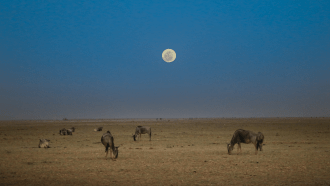
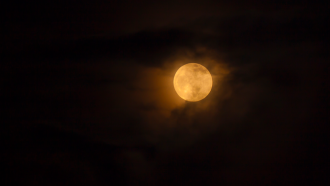
The moon has power over animals
The moon is known for its tidal effects. But its light also can exert a powerful influence on animals large and small.
- Health & Medicine
Does the moon influence people?
Unless you believe in werewolves (and you shouldn’t), there are few compelling data to suggest the moon has a big effect on people.
- Agriculture
Groundwater pumping is draining rivers and streams worldwide
Excessive groundwater use could push more than half of the regions that depend on water pumped up from underground aquifers past an environmental tipping point by 2050. That could threaten aquatic ecosystems around the world.