All Stories
- Environment
Here’s the science you loved in 2018
When our readers read about science, they want to read about research that hits close to home, like smartphones, chocolate, vaping and more.
- Environment
ICYMI: 2018’s top science offerings
From gene-edited babies to firenados and lavanados, this year offered both stunning news and curiosities in the world of science and research.
- Health & Medicine
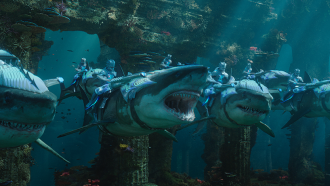
What makes Aquaman special? He can take a lot of pressure
The new Aquaman movie makes life under the sea look pretty glamorous. In fact, we puny humans probably couldn’t take the pressure.
- Health & Medicine
Keeping an irregular schedule may change how many calories you burn
Our daily cycle of calorie burning is one of many body processes that follow a biological clock.
- Oceans
This robotic jellyfish is a climate spy
Scientists have developed a robotic jellyfish to collect data about the ocean. It’s small and nimble, and gentle on marine ecosystems.
- Health & Medicine
Silver nanoparticles help fight brain-eating amoebas
Nanotechnology may be — quite literally — a silver bullet for these microscopic monsters.
- Health & Medicine
Sleepless nights can leave brains feeling anxious
Pulling an all-nighter boosts anxiety levels — and changes brain activity — the next morning, a new study finds.
- Climate
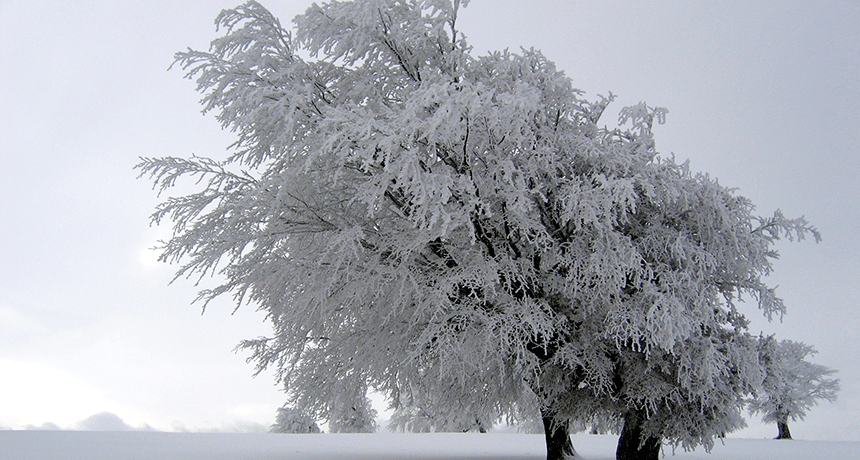
Scientists Say: Rime ice
Rime ice is ice that forms when water freezes in a snap onto a surface.
- Earth
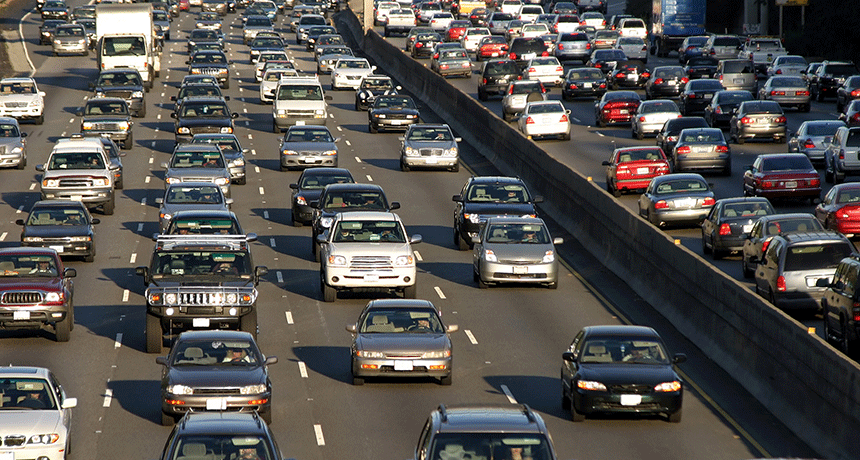
Car tires and brakes spew harmful microplastics
Wear and tear on car tires, brakes and roads releases harmful microplastics to the air. These end up polluting waterways and harming fragile ecosystems.
- Animals
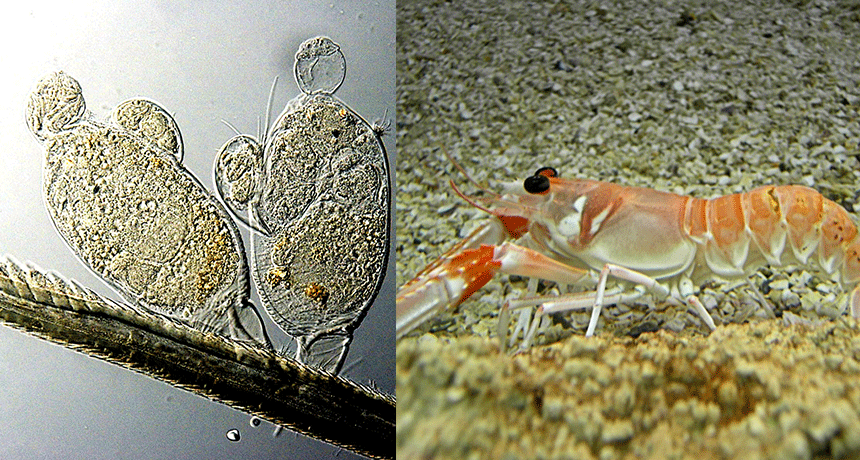
Living Mysteries: This complex beast lurks on lobster whiskers
A tiny animal discovered on a lobster’s whiskers shows that the smallest animals on Earth can be surprisingly complex.
- Climate
Carbon dioxide emissions will hit a record high globally in 2018
CO2 emissions from China, the United States and India all rose in 2018, a new report finds. This is despite urgent calls for nations to cut back on their releases of this greenhouse gas.
- Physics
Much of a proton’s mass comes from the energy of the particles inside it
Thanks, Einstein! Your famous E=mc2 formula now explains much of a proton’s ‘mass.’ Its building-block quarks make up just a small part of its left, calculations now show.