All Stories
- Ecosystems
Scientists Say: Bog
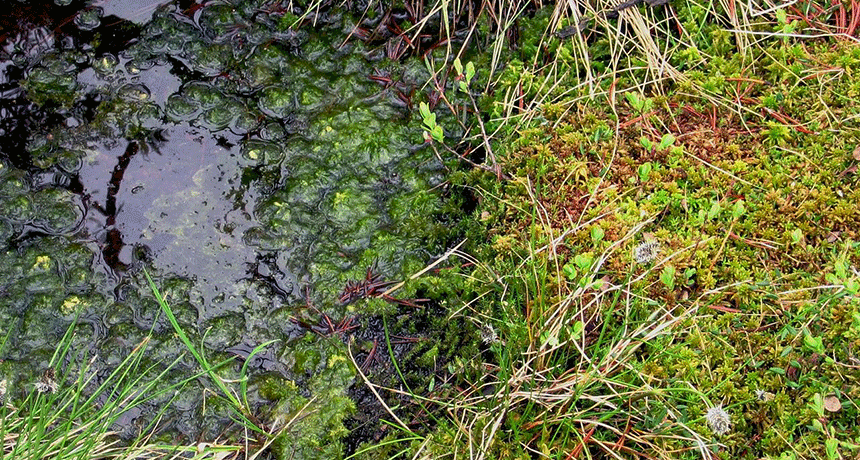
Bogs are a type of wetland in which partially decayed plants sink down and form peat.
- Health & Medicine
High-nicotine e-cigs up chance teen will become a smoker
New study links vaping high levels of nicotine to greater likelihood teens will vape — and smoke — six months later.
- Tech
AI can guide us — or just entertain
Advances in artificial intelligence are changing the worlds of medicine, education and the arts.
- Animals
Alligators aren’t just freshwater animals
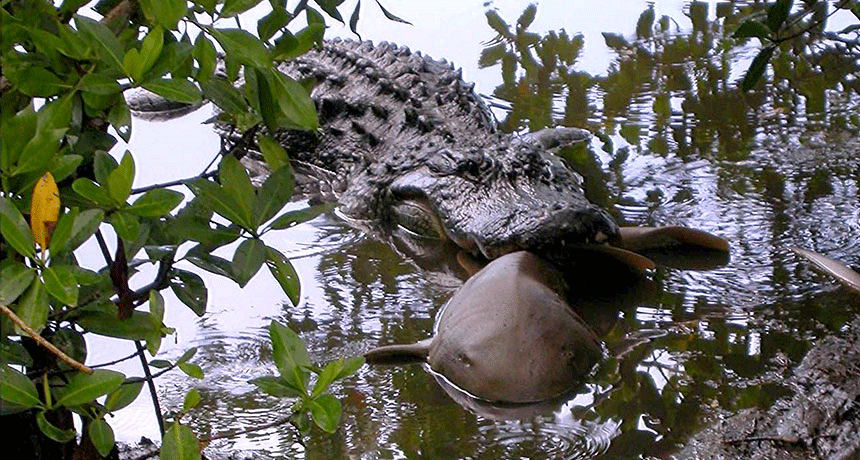
It’s time to change the textbooks. Alligators have been seen in salty waters snacking on sharks.
- Genetics
Doctors repair skin of boy dying from ‘butterfly’ disease
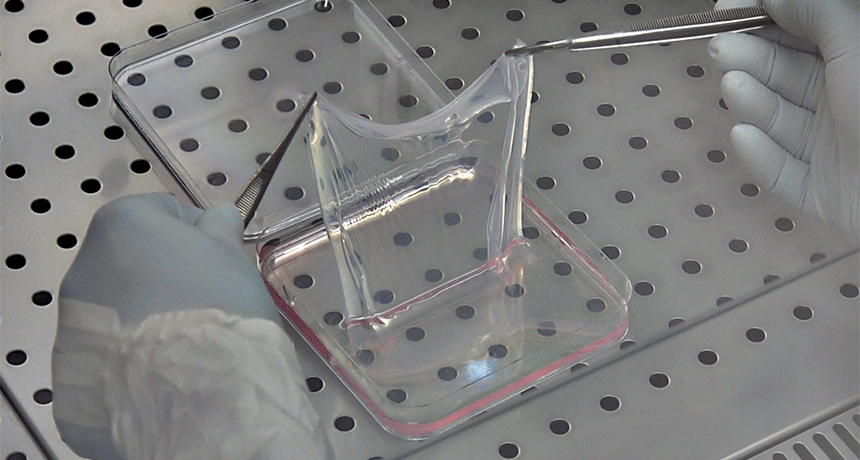
Researchers fixed a genetic defect, then replaced about 80 percent of a child’s skin. This essentially cured the boy’s life-threatening disease.
- Animals
Lasers can turn a spider’s silk into sculptures
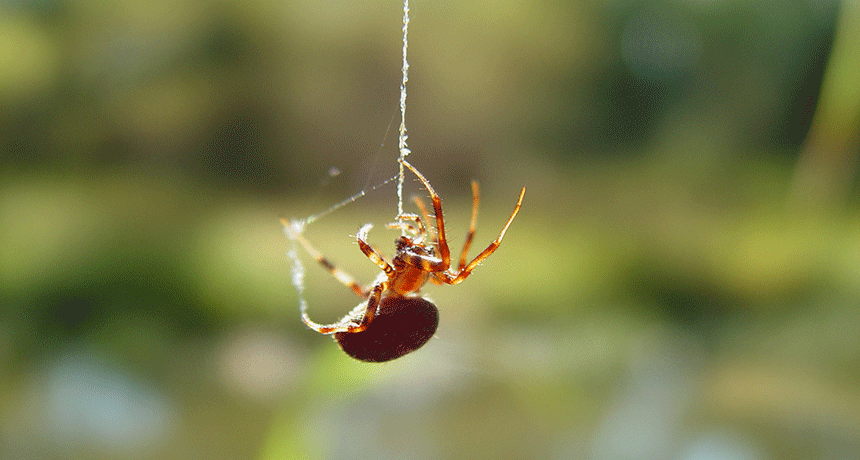
Spider silk is strong and super-stretchy. Scientists have developed a way to sculpt that material into unusual, micro-scale shapes using lasers.
- Chemistry
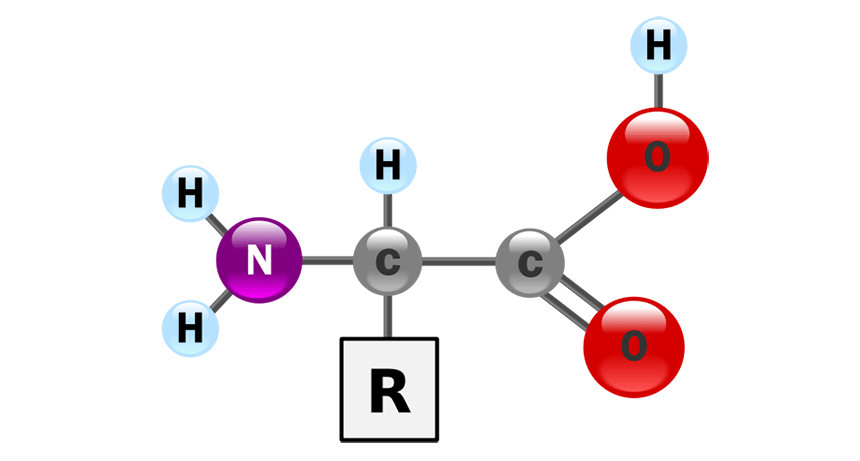
Scientists Say: Amino Acid
Amino acids are small molecules that make up proteins and serve as messengers in our cells.
- Science & Society
This robot won’t trip people up
New robots can follow the social rules of moving through a crowd, such as keeping to the right and passing on the left.
- Computing
Computers can translate languages, but first they have to learn
Translation programs are getting quite good at converting text from one language to another. Translating between three or more languages at once is trickier.
- Animals
Tiny T. rex arms were built for combat
The fearsome T. rex had more than a mouth full of killer teeth. Its relatively tiny arms also could have served in close combat as powerful slashers.
- Archaeology
Scientists detect mystery void in Great Pyramid of Giza
Using high-tech tools normally reserved for studies in particle physics, scientists have found a large, hidden void inside Egypt’s Great Pyramid of Giza.
- Physics
Ancient light may point to where the cosmos’ missing matter hides
The universe is missing some of its matter. Now astronomers may have a way to find it.