All Stories
- Physics
Teen identifies way to detect failing underground pipes
A teen researcher uses acoustics — here, pipe vibrations — to test whether buried water pipes are about to fail, and leak.
- Planets
Space toilet may teach scientists how to scout for life on distant icy moons
Lessons learned from flushing space toilets may help plan life-hunting missions on distant icy moons.
- Health & Medicine
Vaping may stiffen the heart and blood vessels
Exposure to e-cigarette vapors damages blood vessels in mice, suggesting that vaping could put people at risk for heart disease.
- Chemistry
Knowing what you don’t know can help your grades improve
Students who don’t know much tend to be overconfident. A new study shows how bursting their bubbles can help their grades.
- Animals
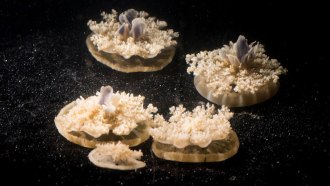
Surprise! Some jellyfish appear to need their zzz’s
Some upside-down jellyfish are the first known creatures lacking a brain to enter a sleeplike state.
- Animals
Scientists Say: Luminescence
Light and heat don’t always have to go together! Luminescence is what occurs when a substance emits light without making heat.
- Climate
‘Watermelon’ snow is helping melt glaciers
Microbes that paint snow pink are accelerating the melting of ice fields in Alaska.
- Chemistry
Science works to save a salty world treasure
Poland’s 700-year old salt mine, just outside Kraków, not only is a cultural art treasure, but also an active research site for geologists, chemists and more.
- Brain
Small genetic accident made Zika more dangerous
A new study finds that a tiny mutation made the Zika virus more dangerous, by helping it kill cells in the fetal brain.
- Health & Medicine
Analyze This: Does moderate screen time boost teen happiness?
Computers, smartphones and TVs are everywhere. And scientists are trying to discover whether that’s a good thing for our well-being.
- Animals
Earthworm invaders may be stressing out some maples
Worms are great for soil when ecosystems have evolved with them. But in earthworm-free places, like parts of the U.S. Upper Midwest, they can cause problems for plants and animals.
- Brain
A cell hookup helps the tongue tell sweet from sour
To keep your sense of taste, new taste cells need to hook up to your brain every few weeks. Now, scientists have figured out how they do it.