All Stories
- Tech
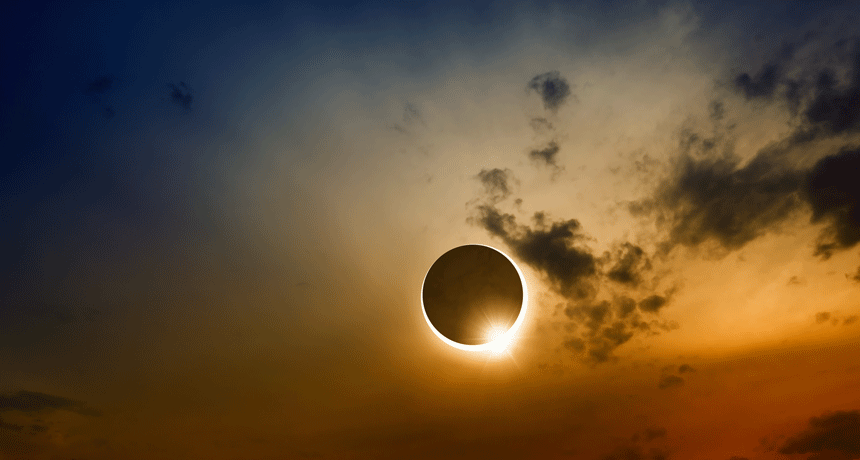
How to safely watch a solar eclipse
Certified safety glasses are a must for protecting your eyes when looking at the sun. Here’s how to safely enjoy a solar eclipse, like the one on August 21, 2017.
- Space
Citizen scientists wanted to make an eclipse megamovie
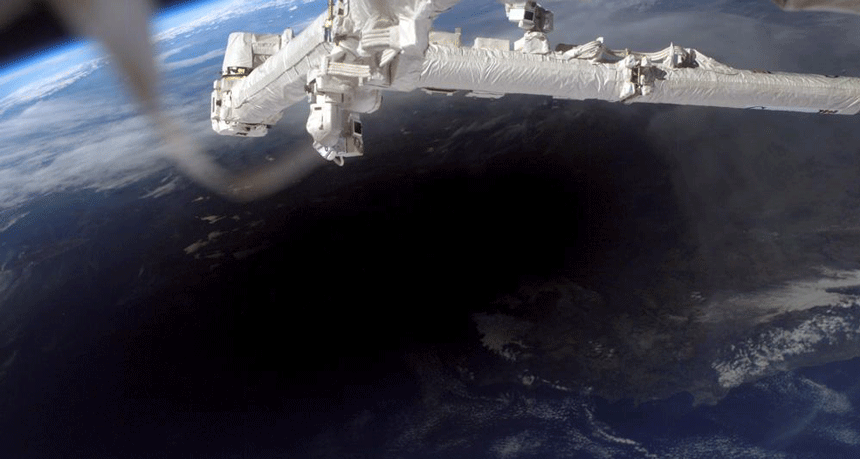
A solar eclipse will cross the United States on August 21, 2017. Video capture by people in the eclipse’s path can help with scientific research.
- Chemistry
Scientists know that you pee in the pool
A new way to find urine in pools and hot tubs measures the concentration of an artificial sweetener in the water.
- Physics
Eclipses come in many forms
Eclipses are one of nature’s most awesome spectacles, and scientists have learned a lot by observing them and related celestial alignments — occultations and transits.
- Health & Medicine
Ötzi the mummified Iceman actually froze to death
Ötzi the Iceman, a mummy whose icy 5,300-year-old remains turned up in the Alps in 1991, died of the cold — not murder. That’s the result of new forensic analyses.
- Health & Medicine
Concerns explode over new health risks of vaping
A host of brand new studies unearth worrisome health concerns related to teen vaping.
- Life
‘Nanostraws’ safely sneak a peek inside cells
Scientists have developed tiny straws that let them peek inside a living cell without killing it or even damaging it.
- Planets
Scientists Say: Eclipse
How the sun, moon and Earth line up determines whether there’s a solar or lunar eclipse.
- Brain
Just viewing super-size meals can promote overeating
Large portions of food dampen activity in a brain area involved in self-control, a new study shows.
- Animals
Industrious badger caught burying an entire cow
Badgers are known to bury small animals. That allows them to save a meal for future dining. Now researchers have caught them caching something much bigger: young cows.
- Computing
Teaching robots right from wrong
Robots of the future will face tricky dilemmas. Researchers are working on tools to help robots make the right choices and keep people safe.
- Brain
Food smells better to sleepyheads
People who want to resist junk foods or overeating may want to make sure they get a good night’s rest. Being tired makes the scent of foods more appealing, a new study finds.