All Stories
- Health & Medicine
Hibernation: Secrets of the big sleep
Mammals from bears to squirrels hibernate the winter away. Learning how they do it might one day help people mimic aspects of it to heal from brain injuries or voyage to Mars.
- Animals
Explainer: How brief can hibernation be?
Many animals frequently slow body functions and drop their temperatures — sometimes for just a day. Is that hibernation, or just torpor? Are the two even related? Scientists disagree.
- Tech
Scientists turn toy into valuable tool for medical diagnosis
A human-powered ‘paperfuge,’ inspired by a toy, could serve as an easy, low-cost way to aid in medical diagnoses, even in regions of the world lacking access to electricity.
- Health & Medicine
Jiggly gelatin: Good workout snack for athletes?
Eating a vitamin-rich, Jell-O-like snack could help the body make the collagen needed to repair bones and ligaments that can be damaged by exercise.
- Agriculture
Wild hamsters raised on corn eat their young alive
European hamsters raised in the lab turn into crazy cannibals when fed a diet rich in corn, new data show. The problem may trace to a shortage of a key vitamin.
- Psychology
Physically abused kids struggle to learn about rewards
What physically abused kids learn about rewards at home can lead to misbehavior elsewhere.
- Planets
Scientists Say: Goldilocks zone
Not too hot, not too cold. Just right. This is the region around a star where water could be a liquid, instead of a solid or gas.
- Computing
Germs power new paper batteries
New paper-based batteries rely on bacteria to generate electricity. These ‘papertronic’ power systems may be a safer choice for remote sites or dangerous environments.
- Animals
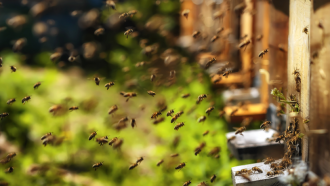
Cool Jobs: Abuzz for bees
These scientists are keeping bees healthy, making medicines for people from honey and constructing bee-inspired robots.
- Microbes
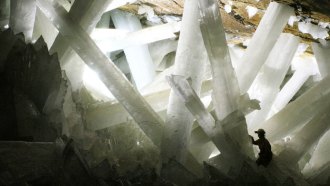
Giant cave crystals may be home to 50,000-year-old microbes
Microbes trapped in crystals in Mexico's Naica mine may represent some of the most distinct life forms ever found. The microbes have remained dormant for up to 50,000 years.
- Archaeology
Space archaeologists need your help to protect ancient treasures
Explorers who search for ancient ruins in satellite images are asking for help from the public. Volunteers can visit a new website to sign up.
-
Four tips for reading a scientific paper
Don’t let dense writing and big words put you off. Use these handy tips to get through the jargon.