All Stories
- Math
What happens when you look at crime by the numbers
Statistics can find crime hot spots or flag which police officers are more likely to shoot at crime scenes. Unfortunately, some data risk misleading the police.
- Health & Medicine
Mental illness may be a common life experience
Those who stay mentally healthy from childhood to middle age are exceptions to the rule. Most people don’t, a new study reveals.
-
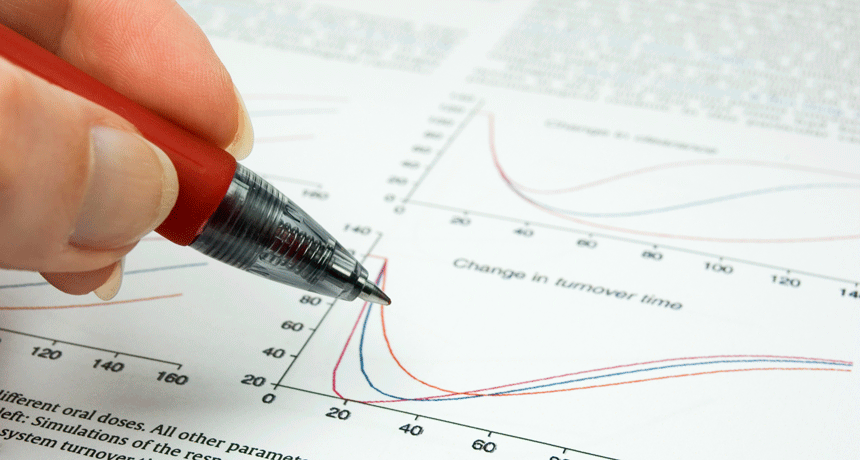
To understand a scientific paper, delve into its parts
Scientific papers can look very scary. But they don’t have to be. Here’s how journal articles are organized.
- Chemistry
Explainer: What is a catalyst?
Catalysts are used in manufacturing and many technologies. They’re also found in living things. They help chemical reactions move along.
- Health & Medicine
Umbrella’s shade doesn’t prevent sunburn
Sunblock may be sticky and uncomfortable, but it blocked more of the sun's harmful rays than did an umbrella, a new study found.
- Physics
Scientists Say: Dark matter
Most of the universe isn’t made of stuff we can see. Scientists think some of it might be made of dark matter — matter that emits no radiation.
- Health & Medicine
Speaking Mandarin may offer kids a musical edge
Scientists have linked a type of musical ability with the knowledge of Mandarin, the primary language of China.
- Physics
New solar system found to have 7 Earth-size planets
A neighboring star system hosts seven Earth-like planets. Especially surprising: Three of those planets appear to reside in a zone that could support life as we know it.
- Computing
Wired and weird: Meet the cyborg plants
By mixing electronics with greenery, engineers have made plants that conduct electricity, detect bombs and send email.
- Genetics
How to view tiny parts of DNA? Make them ‘blink’
A new technique can image nanoscale structures in cells without hurting them. No dyes needed. All you have to do is stimulate them with the right color of light.
- Brain
Chewing or breathing sounds make you seethe? Blame your brain
People who can’t stand everyday sounds, such as chewing and breathing. The reason traces to how their brains are wired, new research finds.
- Genetics
How to make a ‘three-parent’ baby
Scientists combined an egg, sperm and some donor DNA: The end result: what appears to be healthy babies.