All Stories
-
Highlights from the 2017 Regeneron Science Talent Search
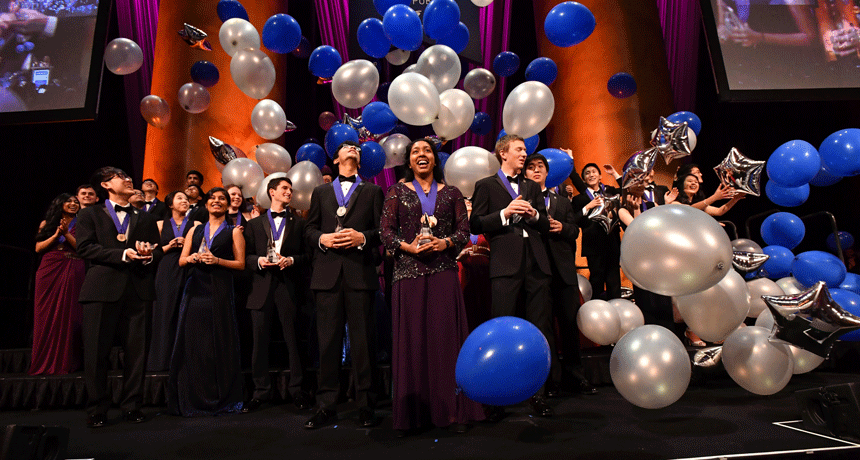
The Regeneron Science Talent Search celebrates 40 of the brightest young scientific minds at a gala celebration.
- Brain
High-school brain researcher takes home $250,000 prize
Three teens won big in this year’s Regeneron Science Talent Search. They studied brain injury, mathematical models and networks of connections within big data sets.
-
Why do science? Teens explain why they put in the effort
Doing scientific research can be hard work. Here, the finalists of the Regeneron Science Talent Search explain why it’s all worth it.
- Physics
Star caught passing gas before exploding
Stars can become unstable as they near death, a new study suggests. Some may even spew gas for a year or so before they explode.
- Space
Student programs computer to predict path of space trash
People are already using space as a garbage dump, which could prove dangerous to future space travelers. A teen set out to track space junk using only her home computer.
- Agriculture
Teen converts water pollutant into a plant fertilizer
Too much phosphate can fuel algal growth, which can rob oxygen from the water. This can suffocate fish and other wildlife. Stefan Wan found a way to collect that pollutant, which can later be used as a farm nutrient.
- Animals
Malaria parasites lure mosquitoes to infected hosts
Malaria parasites leave behind an alluring molecule in their hosts’ blood. It draws mosquitoes to sip it, helping spread the disease these carry.
- Microbes
Teen invents a dip to keep germs away
A teen competing in the 2017 Regeneron Science Talent Search invented an eco-friendly chemical mix. It should keep bacteria from growing on treated paper, fabrics — including wound coverings — and more.
- Earth
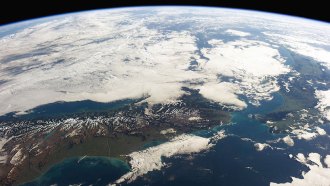
Is Zealandia a continent?
Geologists are making the case for a new continent, that they would dub Zealandia. It can be found largely submerged beneath the southwestern Pacific Ocean.
- Life
Scientists Say: ATP
This chemical is a bit like a rechargeable battery. Cells build and break apart its chemical bonds to store and release energy.
- Brain
Teens make riskier decisions than children or adults
Teens may make risky decisions in part because they don’t care about uncertainty.
- Science & Society
For minority students to succeed, teachers need to earn trust
Minority middle-school students begin to lose trust in their teachers when they see peers treated unfairly.