All Stories
- Earth
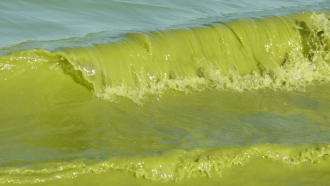
Water sensor quickly detects algal poison
A new sensor can detect poisons from harmful algae within minutes so that drinking-water plants can start timely treatments.
- Science & Society
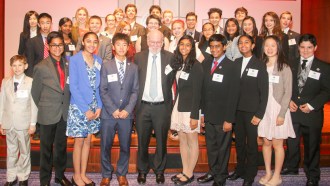
Broadcom MASTERS awards honor science, invention and teamwork
Each year, 30 middle school science fair winners work together to show off their science knowledge and innovation skills.
- Climate
Cool Jobs: Wet and wild weather
How’s the weather? Forecasts rely on scientists and engineers who collect and interpret data gathered on the ground, in the sky and way up in space.
- Environment
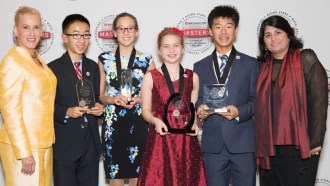
Rocket nozzle research propels teen to big win
A 13-year old won the top prize at this year’s Broadcom MASTERS science competition. She had determined the best shape for a rocket nozzle.
- Environment
Fattening maggots to create a designer food
Davia Allen wants to reduce food waste by feeding it to fly larvae — which can then serve as food for poultry, fish and people.
- Brain
Out-of-whack body clock causes more than sleepiness
When the body’s “clock” doesn’t match the cues its getting from outside, people can feel bad. Researchers are using math to explain this “circadian-time sickness.”
-
When science blew up in my face, I learned…
Everyone working on a science project sometimes fails. Listen to these Broadcom MASTERS finalists share what their failures taught them.
- Computing
How computers get out the vote
Increasingly computers play a role in voting. Here’s why that concerns scientists, even as they acknowledge that computers may be increasingly essential.
- Space
Galaxy count has just spiked
The universe may have hosted 2 trillion galaxies. That’s about 10 times as many as astronomers had thought were out there.
-
- Brain
Teen brains may have an advantage — better learning
The teen brain is infamous for prizing rewards and encouraging risky behavior. But their reward-driven behavior may help those teens learn some things better than adults.
- Brain
Zombies are real!
Some parasites worm their way into other creatures’ brains and alter their victims’ behavior. Meet zombie ants, spiders, cockroaches, fish and more.