All Stories
- Health & Medicine
Adult diseases may be linked to childhood weight
Danish scientists find that very overweight kids grow up with a heightened risk of colon cancer and stroke.
- Climate
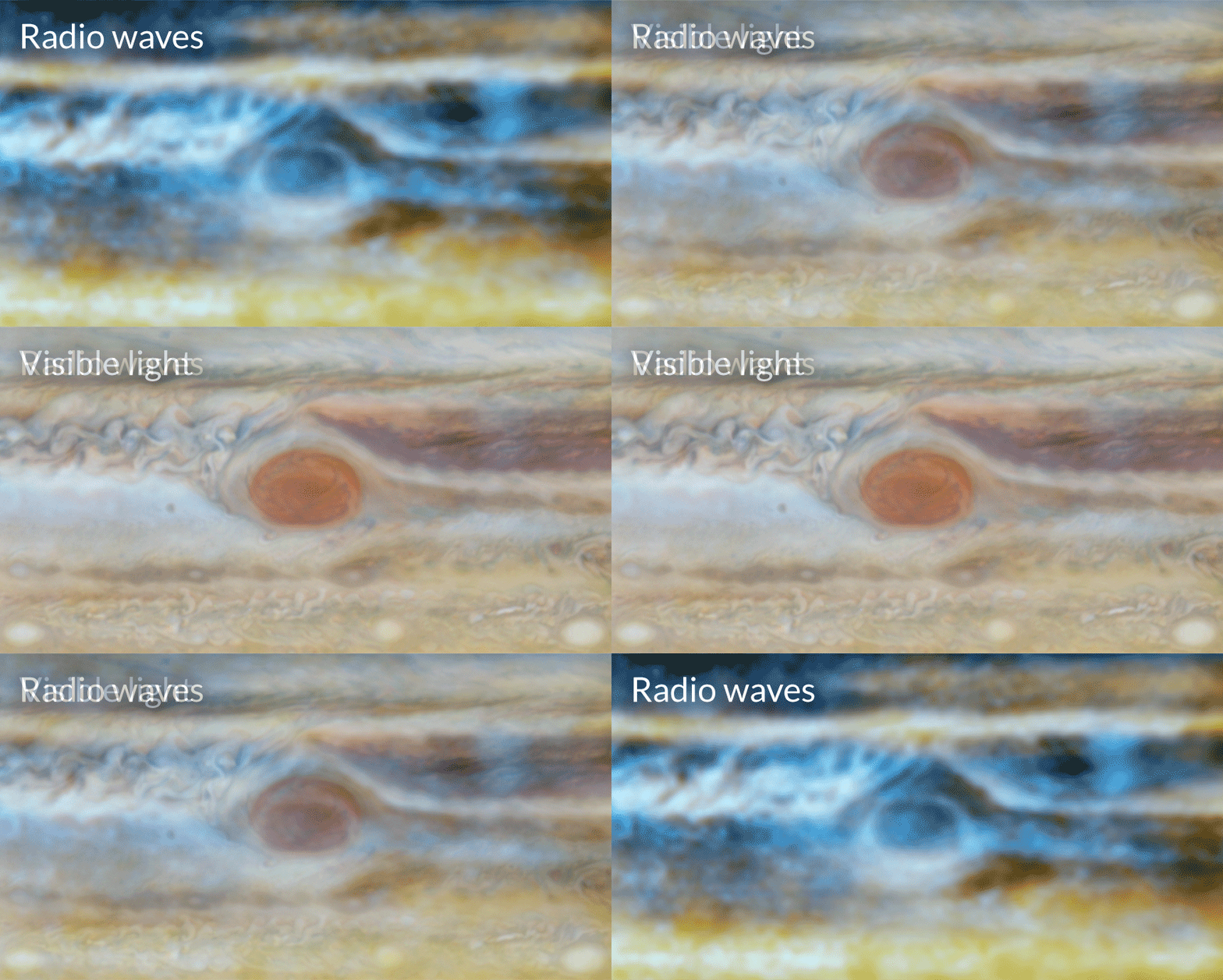
Jupiter’s stormy weather runs deep
Jupiter is covered in swirling storms. A new 3-D map of the planet’s atmosphere shows those storms start far, far below the clouds.
- Physics
Cool Jobs: Solar sleuthing
No star is closer than the sun, and yet there’s much science still don’t know about how it actually works. These scientists are helping solve the mysteries.
- Earth
Fighting big farm pollution with a tiny plant
Fertilizer runoff can fuel the growth of toxic algae nearby lakes. A teen decided to harness a tiny plant to sop up that fertilizer.
- Chemistry
Concrete science
Teen researchers are exploring ways to strengthen this building material, use it for safety purposes and use its discarded rubble.
- Physics
Famous physics cat now alive, dead and in two boxes at once
Splitting Erwin Schrödinger’s famous — and fictitious — cat between two boxes brings scientists one step closer to building quantum computers from microwaves.
- Brain
Teen drinking may damage ability to cope with stress
Teens are often tempted to drink alcohol. Drinking too much — and repeatedly — can hurt their ability to manage stress, a study in rats indicates.
- Life
Scientists Say: Exocytosis
For a cell to remove something large from inside itself, it turns to a process called exocytosis.
- Climate
Zapping clouds with lasers could alter Earth’s climate
Scientists zapped ice crystals in a lab. They were exploring whether this approach might be used to break those crystals in clouds — potentially as a way to cool Earth’s fever.
- Space
Biologist Kate Rubins is headed to space
Molecular biologist and astronaut Kate Rubins has spent 7 years preparing for a mission to the International Space Station. She blasts off this month.
- Computing
‘Couch potatoes’ tend to be TV-energy hogs
Many government programs urge people to save electricity by using more efficient TVs. Here’s why these programs should target “couch potatoes.”
- Chemistry
The newest elements finally have names
Nihonium? Tennessine? These aren’t body parts or medicines. They’re among the names just given to the four newest superheavy elements.