All Stories
- Space
An alarm system for Earth crashers
The ATLAS telescope could be a last-minute warning system for asteroids just days away from hitting Earth.
- Chemistry
Scientists Say: Base
Bases are chemicals that contain negatively charged chemical groups made from oxygen and hydrogen. They lend coffee its bitter flavor and have pH rankings higher than 7.0.
-
How kids ‘see’ scientists depends on what they read
When students draw a scientist, they rely on messages from textbooks and other media. Now do your own version of the experiment and see if your results match.
- Health & Medicine
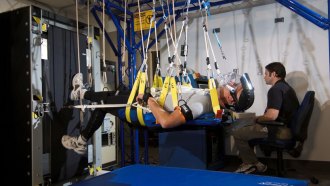
Cool Jobs: Researchers on the run
Researchers are taking running to extremes, from Olympic lizards to treadmills in space. The goal is to learn how athletes of all kinds can stay healthier.
- Health & Medicine
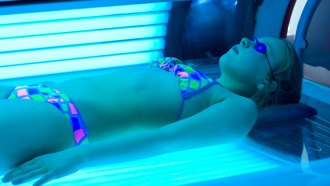
FDA wants to ban indoor tanning by teens
Because tanning beds can increase the risk of skin cancer, the FDA has proposed banning their use in the United States by anyone under 18.
- Animals
What a drag! Fishing gear’s effects on whales
Many whales become entangled in the gear that fishing boats use to catch fish and shellfish. Such debris can have dire impacts on the big mammals.
- Health & Medicine
Too many football hits can change the brain
A former football player who died in his mid-20s had serious Alzheimer's-like damage that doctors are now linking to repeated concussions.
- Space
New recipe for monster black holes
The conventional idea for how black holes form would not easily allow for huge ones to develop in the early universe. Yet they did. Now a scientist offers a new view: galaxy mash-ups!
- Chemistry
Scientists Say: Acid
When a chemical tastes sour, ranks below 7.0 on the pH scale and has many hydrogen ions in its solution, it gets a special name.
- Health & Medicine
Back off the bacon and cold cuts?
Here’s how to make sense of the World Health Organization report that has just linked certain meats to a dangerous cancer.
- Earth
Bubbles may have sheltered Earth’s early life
For Earth’s earliest inhabitants, a bubble on the beach would have been the next best thing to a safety blanket.
- Climate
Arctic ice travels fast, carrying pollution
Climate change is melting old sea ice in the Arctic. Now, younger, thinner ice is migrating far and fast, taking pollutants with it.