All Stories
- Health & Medicine
Allergies linked to obesity and heart risks
Children and teens with asthma, allergies or other autoimmune conditions tend to be overweight and show symptoms of heart-disease risks, a new study finds.
- Chemistry
News Brief: 2016 brings four new elements
U.S., Russian and Japanese scientists have just been credited with official discoveries of elements 113, 115, 117 and 118. Next up: Naming them.
- Chemistry
Mystery ‘earmuffs’ sit deep inside Earth
Two vast blobs in Earth’s lower mantle could result from a “trainwreck” of ancient colliding tectonic plates.
- Genetics
Scientists Say: Mutation
Information in an organism is stored in a code. Here’s the word scientists use to describe a change in that code.
- Animals
Faking out whales
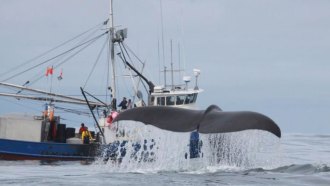
A false “dinner bell” can safely distract hungry whales from stealing fish from commercial fishing lines, new research shows.
- Earth
News Brief: Why rainbows can lose some hues
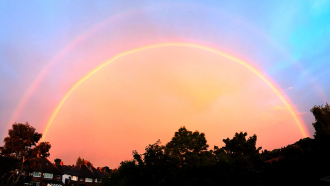
When the sun is right near the horizon, such as at sunset, its light travels through the most atmosphere. When there’s also plenty of water in the air, this can rob colors from a rainbow, scientists now report.
- Chemistry
Rocks hold clues to ancient die-offs
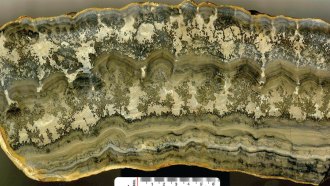
Rocks that formed during ancient mass-extinction show that the oceans back then had become very warm. That was the last time Earth spewed carbon dioxide into its atmosphere at a rate similar to what is happening today.
- Physics
Zombie stars: A source of gravitational waves?
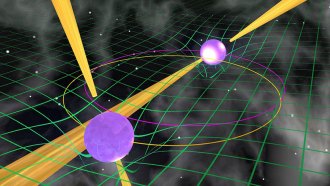
Scientists have found indirect evidence that the dense cores of dead stars are making ripples in space, known as gravitational waves. These waves have been predicted but never yet directly “seen.”
- Chemistry
Scientists Say: Keratin
Keratin is a fibrous protein that gives our nails and hair their strength.
- Animals
Do dogs have a sense of self?
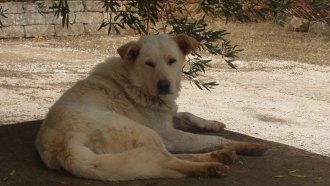
Dogs don’t know their own reflections in a mirror, but they do recognize themselves from the scent of their own urine, a new study finds.
- Agriculture
Building better, safer soils
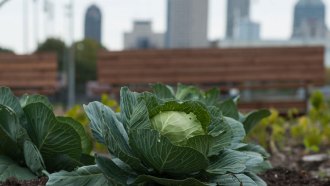
Engineering safer soils for urban growers can reduce the risk of lead exposure and let low-income families enjoy more fresh fruits and vegetables.
- Earth
The most important stories of 2015
From Pluto to gene editing, the year saw a number of notable research discoveries, advances and insights.