All Stories
- Tech
Think of this new tech as sunglasses for our windows
Keeping buildings cool can use a lot of energy. Thanks to quantum computing, engineers designed a coating to cut the warming light that enters windows.
- Earth
Scientists Say: Equinox and Solstice
Equinoxes and solstices mark the maximums, minimums and mediums of hours spent in daylight.
- Archaeology
Minding your mummies: The science of mummification
In this science project, you will learn about the rituals and science of mummification by mummifying a hot dog.
- Space
Spacecraft traveling through a wormhole could send messages home
A probe going through a wormhole should be able to send messages home before such a tunnel forever closes, a new computer model finds.
- Climate
Creating less new stuff could greatly help Earth’s climate
Instead of throwing unneeded things away, scientists recommend moving to a cycle of reducing, reusing, repairing and remaking old things into new ones.
- Tech
Can we build Baymax?
Baymax may be science fiction, but soft robotics is not. Experts break down Baymax’s parts and show what’s coming in the future.
- Health & Medicine
High school scientists tackle community health and safety risks
Three finalists in the 2023 Regeneron Science Talent Search aim to improve suicide risk assessment, treatment of sickle cell disease and more.
- Materials Science
Let’s learn about piezoelectric materials
Piezoelectric materials turn mechanical energy into electrical energy — and vice versa.
- Math
Scientists Say: Calculus
Calculus is math that deals with curves, from their changing slopes to the areas they enclose.
- Computing
A single chip like this could transmit a world’s worth of data
The internet has a big environmental footprint. But this new type of tech could help reduce the climate impact of computing.
- Science & Society
How daylight saving time throws off your internal clock
Turning the clock ahead knocks our bodies and brains out of sync with the sun. That leads to many potential health issues.
- Planets
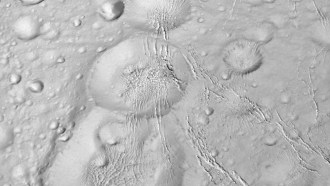
Saturn’s moon Enceladus wears a thick blanket of snow
Pits on the frosty moon reveal the snow’s surprising depth, up to 700 meters (2,300 feet) in some places.